

Data shows 20% of authors earned over $100,000 annually in 2023. Most others made less than $10,000. Income diversity causes this gap. Betting your rent on ebook royalties alone is dangerous. You must construct systems that generate cash while you sleep, write, or take a break.
- Expand or fail: Successful authors (top 12%) maintain 3+ income streams besides book sales.
- Repurpose content: Transform one manuscript into audio, classes, and translated versions to increase revenue without typing new words.
- Direct sales are king: Selling PDFs, EPUBs, and gear straight to fans creates 90%+ margins compared to Amazon’s 35-70%.
- Start small: Choose one extra channel (like referral links or a workbook) before launching a massive academy.
Most writers assume earning more requires writing more books. A large backlist helps, sure. But it's the most difficult road to financial freedom. Smart creators establish passive income for authors by extracting full value from the intellectual property they currently hold.
Estimates place the average author income in 2026 around $68,548. This figure leans heavily on those treating writing as a business with several revenue branches. Moving from hobbyist to professional requires thinking like a media company, not just a writer.
Why Passive Income for Authors Matters in 2026
Publishing has changed. A Mayfair Publishers report states that while the median wage for self-published authors jumped 53% recently, the bottom remains low for those who refuse to branch out.
Trusting one algorithm is foolish. If Amazon alters its Kindle Unlimited payout again, or if Facebook ad costs triple (which happened), your main cash source could vanish instantly. Passive streams function as insurance. They steady your bank account so a slow sales month doesn't prevent you from paying rent.
True wealth isn't working harder. It's constructing assets that work on your behalf.
Below are ten proven methods to construct those assets.
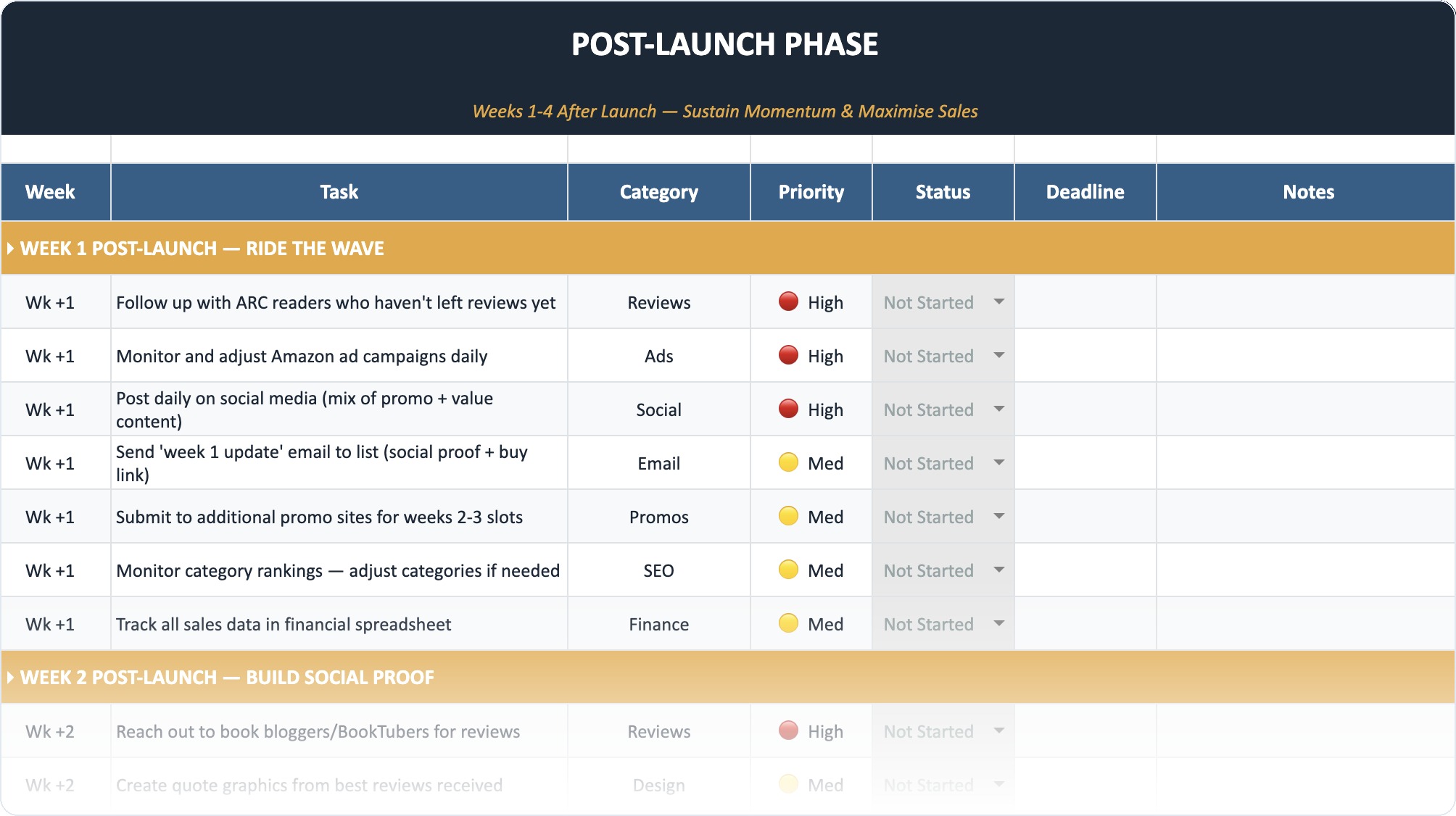
The Self-Publishing Launch Checklist (2026)
A week-by-week spreadsheet that walks you through every step of launching your book. Available as an Excel file and Google Sheet.
1. Audiobooks (The "Must-Have" Asset)
Ignoring audio means ignoring a huge audience chunk if your book is only text. Audiobooks aren't optional anymore. A professional catalog requires them. The audio market has expanded by double digits annually for a decade.
Upfront costs scare many authors. Professional narrators often charge $200 to $400 per finished hour. A standard 80,000-word novel demands a $2,000 investment minimum.
But cash isn't always necessary.
Royalty Share
Platforms like ACX (Audible) let you split royalties with a narrator. You pay $0 now. The narrator receives 50% of your royalties for seven years. Entering the market this way carries zero risk.
AI Narration (The New Frontier)
Google Play Books and KDP run beta programs for AI narration. Human voices still beat AI for fiction. However, AI narration works surprisingly well for non-fiction. It gets an audio version to market at no cost.
Earning Potential: High. Audio listeners pay more than ebook readers.
Difficulty: Medium. Production management eats time.
Non-fiction writers should narrate the book themselves. Readers like hearing the author's voice, plus you save thousands on production fees.
2. Bundling and Box Sets
This is the easiest money available. Take three existing books, apply a new digital cover, and sell them as a single "box set" product.
Why it works:
- Read-through: Readers must buy the full series immediately.
- KU Page Reads: A box set counts as one borrow in Kindle Unlimited, yet it keeps the reader busy for 1,500+ pages. The algorithm notices this retention and pushes your books.
- Perceived Value: Buyers want bargains. Getting three books for $9.99 looks like a steal compared to paying $4.99 each.
You create a new product SKU without typing a new word. Just get a 3D box set cover image and use Vellum (or similar tools) to merge the files.
Check our guide on the best self-publishing platforms for new authors for a closer look at supporting platforms.
3. Print-on-Demand (POD) Merchandise
Your characters use catchphrases. Your book features a logo. Your world contains a map.
Fans signal their identity through purchases. They want the shirt or mug that proves they belong to your "tribe." Previously, you bought 100 t-shirts and stored them in the garage. Those days are gone.
Services like Redbubble, Teepublic, or Printful let you upload designs and sell items ranging from stickers to hoodies. A fan buys a shirt, the company prints it, ships it, and manages customer service. You receive a royalty check.
What Sells?
- Quotes: Brief, punchy lines from characters.
- Inside Jokes: References only your readers get.
- Maps: Fantasy fans love maps on mousepads or posters.
- Symbolism: The tattoo on your protagonist's arm.
Earning Potential: Low to Medium. Margins are slim (typically $2-$5 per shirt), but community loyalty grows.
Difficulty: Low. The system runs itself after design upload.
Stop Staring at a Blank Page
Publy is a distraction-free book editor with AI built in. Brainstorm plot ideas, get instant chapter reviews, or rewrite clunky paragraphs. 3 million free words included.

4. Affiliate Marketing for Writers
Writers use tools. You likely use Scrivener, Vellum, Publisher Rocket, or a particular laptop stand. Your readers (often aspiring writers themselves) want to know your setup.
Affiliate marketing means recommending products you like and earning a commission on purchases made through your link.
How to do it ethically
Don't spam your list. Build a "Resources" page on your site. List the tools that aided your publishing path. Join the Amazon Associates program or individual affiliate programs for software like ProWritingAid.
NerdWallet's definition of passive income states that true passivity needs upfront work but little maintenance. An affiliate resource page fits this description perfectly. You build it once. It generates clicks for years.
Earning Potential: Medium.
Difficulty: Low.
5. Direct Sales (The Holy Grail)
Amazon keeps 30% to 65% of your earnings. Selling directly from your website via Shopify, Payhip, or WooCommerce lets you keep roughly 95% of the sale price.
Direct sales allow you to:
- Gather customer emails (Amazon hides this data).
- Upsell products at checkout.
- Receive payment immediately (no 60-day wait).
Sell signed paperbacks, special edition hardcovers, or digital bundles. Setting up a shop takes effort. But owning your customer base pays off long-term.
Curious about printing logistics for direct sales? Read our IngramSpark setup guide to learn efficient author copy ordering.
"B08748N1V9"
Check Price on Amazon →As an Amazon Associate, we earn from qualifying purchases.
6. Online Courses and Workshops
Publishing a book means you know something 99% of the population doesn't. You know how to finish.
Package that knowledge into a course.
- Fiction Authors: Teach "How to Plot a Mystery" or "Worldbuilding 101."
- Non-Fiction Authors: Create a course deepening your book's topic. Wrote a gardening book? Sell a "Spring Planting Masterclass."
Teachable, Thinkific, or Udemy will host your videos. Record them once. People buy them forever.
Revenue potential here is major. Statistics from Whop show digital products like courses drive revenue for 63% of six-figure creators. A $10 ebook is good. A $200 course is better.
For curriculum inspiration, view the 10 best content writing courses to see how professionals structure lessons.
7. Patreon and Membership Models
Subscription income stabilizes everything. Platforms like Patreon or Ream allow superfans to pay a monthly fee (usually $3 to $10) for exclusive access.
What do you offer?
- Early access to chapters (serialization).
- Deleted scenes.
- Monthly Q&A calls.
- Backlog of short stories.
This model transforms casual readers into recurring revenue. 100 fans paying $5 monthly covers your car payment. 1,000 covers your mortgage.
Check How I Became a Full-Time Author in 24 Months to see subscription models aiding rapid career scaling.
8. Workbooks and Low-Content Books
Non-fiction authors find this especially potent. If you wrote "Overcoming Anxiety," create a companion "90-Day Anxiety Journal."
This is a "low content" book. It contains lines, prompts, and exercises. Writing requirements are minimal, yet it provides immense value to readers wanting to apply lessons from your main book.
Publish these via KDP Print like a regular paperback. They link to your main book on Amazon. Visibility increases for both.
Browse our list of low content publishing ideas for more format concepts.
9. Licensing Foreign Rights
Your book is in English. Billions of people speak Spanish, German, or French.
License translation rights to foreign publishers. They pay an advance (often $500 to $5,000) and manage translation, distribution, and marketing locally. You cash the check.
Self-publishing translations is possible but expensive due to hiring translators and proofreaders. Licensing offers the truly passive route. Query foreign rights agents or attend book fairs (like London or Frankfurt) to make connections.
10. Email List Monetization (Sponsorships)
Most authors view their newsletter as a bill. Paying MailerLite or ConvertKit monthly fees to host subscribers feels like a drain. Flip that script.
A list hitting a certain size (usually 2,000+ subscribers) becomes a media asset. Sell ad space.
Other authors will pay for a feature in your newsletter. Services like Swapstack or ConvertKit's Sponsor Network manage this. Sending a weekly email and charging $50 for a sponsorship slot earns an extra $200 monthly for an email you planned to send anyway.
- Diversifies Income
- Protects against algorithm changes
- Builds long-term asset value
- Requires new skill sets
- Upfront time investment
- Distracts from writing
A Note on Speaking and Consulting
The user prompt mentioned speaking, but we must be honest: Speaking is not passive. You must show up. Travel is required. Sickness means no pay.
However, selling recordings of your talks turns speaking into a passive asset. Alternatively, create a "Speaker Kit" allowing others to deliver your workshop for a licensing fee.
Interested in the active side? Read our guide on how to get speaking gigs as a self-published author. Just know it demands different energy than selling digital files.
Summary of Income Streams
| Revenue Stream | Passivity Level | Initial Effort | Earning Potential |
|---|---|---|---|
| Audiobooks | High | Medium | High |
| Box Sets | High | Low | Medium |
| Courses | Medium | High | High |
| Merch | High | Low | Low |
| Direct Sales | Medium | High | High |
The Strategy: Stack, Don't Scatter
Don't try to launch all ten ideas next week. Burnout will happen.
Choose one. Do a box set next month if you have three backlist books. Look at audiobooks after that setup is complete. Start a Patreon once recording begins.
Alibaba's detailed analysis of author earnings reveals the top 5% of earners aren't just working harder. They capture value from direct reader revenue others ignore.
Building passive income resembles construction. You lay bricks. One by one, they look insignificant. Give it two years. You will have built a wall protecting you from book market volatility.
Start today. Select one asset. Build it. Then proceed to the next.
Frequently Asked Questions
Is passive income truly passive for authors?
No income is 100% passive. You must build the asset first (write the book, record the course, design the shirt). "Passive" implies income is decoupled from time. Work is done once. It pays repeatedly without active maintenance.
Which income stream should I start with?
Begin with Affiliate Marketing or Bundling. Affiliate marketing needs only a resources page. Bundling needs only a new cover for existing books. Both cost nothing to start.
Do I need a large audience to make money with merch?
Yes. Books get discovered via Amazon search. Merch usually sells only to existing superfans. It's a monetization play for an established audience rather than discovering a new one.
How much does it cost to start selling direct?
Platforms like Payhip let you start for free. A professional Shopify setup might cost $29/month plus transaction fees. Marketing is the real cost. You must drive traffic to your store instead of Amazon.
Can I do this if I am traditionally published?
Contracts vary. You likely signed away rights for audio and foreign translations. However, you almost certainly kept rights to create courses, merch, and workbooks. Check your contract. You usually have room to maneuver with non-book products.
See these related guides for more help: