

A reader in Ohio stays up until 3 AM, cursing an author's name, because they simply have to know what happened next. That's the power you wield as a writer. Making someone abandon sleep, ignore responsibilities, and devour your next chapter is a real skill, and the cliffhanger is your most potent tool. When you end a chapter on a cliffhanger, you create a simple contract with your reader: you provide the suspense, and they keep turning pages.
These chapter endings are the fuel for a great story. They create narrative drive, build suspense, and turn a casual reader into a devoted fan. What most people get wrong is thinking this is about cheap tricks. It's really about knowing the psychology of storytelling and delivering a moment of tension that feels both shocking and inevitable.
- Create Unanswered Questions: End the chapter by introducing a mystery, a shocking revelation, or an impossible choice that the reader needs to see resolved.
- Stop in Mid-Action: Cut away right in the middle of a high-stakes event, like a fight, a chase, or a countdown, leaving the outcome uncertain.
- Drop an Emotional Bomb: Conclude on a moment of profound emotional impact, such as a betrayal, a confession, or a devastating loss.
- Introduce a New Threat: Just when the characters think they're safe, end the chapter with the arrival of an unexpected visitor or a new, unforeseen danger.
Why a Good Cliffhanger is Non-Negotiable
A cliffhanger does more than just make a chapter exciting. It taps directly into a psychological principle known as the "Zeigarnik effect." Our brains are hardwired to remember unfinished or interrupted tasks better than completed ones. When you leave a question hanging, you create an open loop in the reader's mind. They can't get peace until they close it.
The data backs this up. According to a 2025 reader poll, 61.2% of readers report feeling "hooked" by cliffhangers, which makes them read on. This isn't just an old trick from Victorian serial novels; it's a proven method for audience retention. In fact, further research on narrative structure confirms that stories with cliffhangers make audiences want the next installment more than stories with resolved endings.
But there's a fine line between masterful suspense and cheap manipulation. A good cliffhanger arises from the plot and character development. A bad one feels tacked on and breaks the reader's trust.
| The Right Way (Story-Driven) | The Wrong Way (Manipulative) |
|---|---|
| Raises the Stakes: The outcome affects the character's main goals. | Meaningless Peril: The character is in danger that is easily resolved. |
| Feels Earned: It's a natural consequence of the chapter's events. | Feels Random: A bomb appears out of nowhere with no setup. |
| Promises a Payoff: The reader trusts you'll resolve it satisfactorily. | Breaks Promises: The next chapter reveals "it was all a dream." |
| Focuses on Emotion: The suspense is tied to a character's fear or hope. | Focuses on Shock: The event is shocking but has no emotional weight. |
Overusing cliffhangers can numb your reader. They'll start to anticipate the trick, and the impact will be lost. Use them at key moments to punctuate a major turning point in your story.
25 Ways to End a Chapter on a Cliffhanger
Here are 25 proven methods to stop your reader's heart and force them to turn the page. We'll break down what each one is, why it works, and provide an example you can adapt.
1. The Revelation Bomb
This is the classic "Luke, I am your father." You drop a piece of information that completely reframes the entire story. Everything the character and reader thought they knew is suddenly wrong.
- Why it works: It forces an instant mental recalculation. The reader has to connect new dots and see past events in a new light, making it impossible to put the book down.
- Example: The detective stared at the DNA report. The killer's profile was a perfect match. Not to the suspect in custody, but to his own partner.
2. The Mid-Action Cut
The chapter ends in the middle of a punch, a leap, or a gunshot. The physical outcome is left completely unresolved. This technique is all about freezing time at the moment of highest physical tension.
- Why it works: It denies the reader the resolution of a physical action, creating a powerful sense of kinetic urgency. This is a key technique if you want to learn how to write fight scenes that keep readers on the edge of their seats.
- Example: She swung the ancient sword, the metal humming as it sliced through the air toward the beast's neck. But halfway through the arc, a searing pain erupted in her side. Her eyes widened, not in victory, but in shock, as she looked down to see the dagger buried to the hilt.
3. The Unanswered Question
This is more subtle than a revelation. The chapter closes on a question, either spoken by a character or posed by the narrator, that hangs in the air and demands an answer.
- Why it works: It directly plants a seed of inquiry in the reader's mind. It's a formal invitation to wonder, and the only way to satisfy that curiosity is to read the next chapter.
- Example: He held the strange, pulsating orb in his hands. It felt warm, ancient. The old woman's final words echoed in his mind. "It will grant you one wish," she had said. "But what will it take in return?"
4. The Wrong Decision
The protagonist makes a choice, and the reader knows, or strongly suspects, it's the absolute worst one they could have made. The chapter ends before we see the immediate consequences.
- Why it works: It creates dramatic irony and a sense of impending doom. The reader is screaming "No, don't do it!" and must read on to see the fallout.
- Example: He ignored the frantic warnings from his crew. "Seal the door," he commanded, his voice shaking. "No one gets in or out." On the other side of that door, he'd just trapped his only ally with the monster.
5. The Arrival of a Threat
Things are calm. Maybe too calm. The hero has just won a small victory or found a moment of peace. Then, the chapter ends with the appearance of a new, unexpected, and terrifying threat.
- Why it works: It shatters the reader's sense of security. The sudden shift from relief to dread is a powerful emotional jolt.
- Example: They finally had the fire going, its warmth a small comfort in the frozen wasteland. Sarah smiled, the first real smile in days. That's when they heard it: a single, clear bell tolling from the peak of the dead mountain.
6. The Betrayal Reveal
This one hurts. A character the protagonist and reader trusted completely is revealed to be a traitor. The chapter ends on the moment of discovery.
- Why it works: It's a serious emotional wound. The shock is personal. This isn't just a plot twist; it's a violation of trust that makes the reader question everything. This is a killer technique when you write a villain readers secretly root for, as the betrayal hits even harder.
- Example: He ran to his friend, clutching the antidote. "I've got it! We're safe!" he yelled. But David didn't look relieved. He simply raised his pistol, the barrel cold and steady, and said, "You were never meant to make it back."
7. The Ticking Clock
A deadline is introduced. A bomb is ticking, a poison is spreading, or a ritual must be stopped by sunrise. The chapter ends with the clock starting or a reminder that time is running out.
- Why it works: It adds a layer of external pressure. The conflict is no longer just about if they can succeed, but if they can succeed in time.
- Example: The system locked them out. Red letters flashed on the screen: "REACTOR MELTDOWN IN 10:00 MINUTES." And the only man with the override codes was on the other side of the planet.
A great cliffhanger isn't just about what happens, but who it happens to. Make sure the stakes are intensely personal for your protagonist. The threat shouldn't just be to the world; it should be to their world.
8. The Overheard Secret
The protagonist, hiding or unnoticed, overhears a conversation that changes everything. They learn a secret, a plan, or a motive they were never meant to know.
- Why it works: It gives the reader and the protagonist a knowledge advantage, creating suspense. We know something other characters don't, and we're desperate to see how the protagonist uses this new information.
- Example: Hidden in the closet, she held her breath. "Don't worry, he suspects nothing," the senator's voice drifted through the door. "By morning, the President will be dead, and the public will think it was a tragic accident."
9. The POV Switch at Peak Tension
You build the tension for one character to an unbearable peak. They're about to open the door, face the killer, or make a confession… and then the chapter ends. The next chapter opens with a different character in a different location.
- Why it works: It's delightfully cruel. You force the reader to wait for the resolution they crave, making them read through another character's storyline to get back to the action. This is a fantastic way to structure a book if you plan to write and publish a series, maximizing your success.
- Example: Chapter 10 ends: The creature's claws were inches from his face. He closed his eyes and braced for the end. Chapter 11 begins: Half a world away, Maria sipped her tea, completely unaware of the danger her brother was in.
10. The False Resolution Twist
The reader and character believe the problem is solved. The villain is defeated, the cure is found, the rescue has arrived. The chapter ends with a final sentence that reveals it was all a lie or a temporary victory. This often feels like a great plot twist that surprises readers.
- Why it works: It pulls the rug out from under the reader. The emotional whiplash from relief to horror is incredibly effective.
- Example: He pulled the hero from the rubble. "It's over," he gasped, "We're safe." Then the hero opened his eyes, but they weren't his eyes anymore. They glowed with a malevolent green light.
11. The Disappearance
A character vanishes. One moment they are there, the next they are gone. Or the chapter ends as the character blacks out, only to wake up in a strange place.
- Why it works: It creates an immediate and baffling mystery. The questions of where, why, and how are urgent and compelling.
- Example: She turned to ask him a question, but he wasn't there. The back door was wide open, a cold wind blowing in. His half-empty cup of coffee was still warm on the table.
12. The Ominous Final Line
The action of the chapter concludes, but the final sentence is a chilling statement of fact, a dark prophecy, or a simple, terrifying observation.
- Why it works: It creates a mood of dread that lingers. The problem isn't a direct threat but the implication of a future threat, which can be even more frightening.
- Example: They had escaped the collapsing temple and made it back to the village. They had survived. But as the sun set, they failed to notice that every single villager now had the same strange, vacant smile.
13. The Impossible Choice
The protagonist is forced to choose between two terrible options. Save their friend or save the city? Reveal their identity or let an innocent person die? The chapter ends as the choice is presented.
- Why it works: It's a moral and emotional crisis. There is no right answer, and the reader is invested in the character's internal struggle. The way you frame this depends heavily on your skill with direct characterization in a story.
- Example: "You can have the cure," the villain sneered, holding up two identical vials. "One saves your daughter. The other saves the ten thousand people infected in the city. Choose."
14. The Unexpected Visitor
Similar to the arrival of a threat, but this visitor might not be overtly hostile. It could be a character long thought dead, a figure from the protagonist's past, or law enforcement arriving at the worst possible moment.
- Why it works: It introduces a wild card. This new person completely changes the dynamic of the scene and the direction of the plot.
- Example: He finally finished burying the evidence in the backyard. Wiping the sweat and dirt from his brow, he turned to go inside. Standing on his porch, silhouetted by the moonlight, was his sister, who had been missing for ten years.
15. The Crushing Emotional Blow
This cliffhanger isn't about physical danger, but emotional devastation. A confession of infidelity, a discovery of a heartbreaking secret, or a moment of profound failure. This is how you write a story that will make someone cry.
- Why it works: It hooks the reader's empathy. They feel the character's pain and need to see how they will cope with the emotional fallout.
- Example: She found the letter tucked away in her husband's desk drawer. It wasn't from a lover. It was a rejection letter from the medical board, dated six years ago. Her husband, the man she'd watched leave for the hospital every day, had never been a doctor at all.
16. The Object of Power is Revealed
The MacGuffin, the weapon, the key to everything: the characters finally find it. But the chapter ends just as they lay hands on it, before we learn what it does or how to use it.
- Why it works: It satisfies one quest (finding the object) while immediately creating a new one (understanding and using it). The potential of the object creates immense curiosity.
- Example: After deciphering the final riddle, the stone pedestal opened. There, resting on velvet, was the Serpent's Eye. As he reached for it, the gem pulsed with a dark light, and whispers filled his mind, speaking a language not meant for men.
17. A Prophecy is Unveiled
A character discovers a prophecy that pertains directly to them. It might predict their death, their destiny, or a terrible choice they will have to make.
- Why it works: It introduces the theme of fate versus free will. The reader is compelled to find out if the prophecy will come true or if the character can defy it.
- Example: He unrolled the ancient scroll. The final lines were clear, written in his own language. "And on his 30th birthday, the Chosen One will save the kingdom by striking down the woman he loves." His 30th birthday was tomorrow.
18. The Character Makes a Vow
Fueled by rage, grief, or a newfound purpose, the protagonist makes a solemn, powerful vow. The chapter ends on this declaration of intent.
- Why it works: It sets a clear, powerful goal for the next section of the book. The reader is invested in seeing the character attempt to fulfill this new, driving mission.
- Example: Kneeling in the ashes of his village, he looked up at the smoke-filled sky. He held the charred toy that had belonged to his son. "I don't care if it takes the rest of my life," he whispered, his voice cracking. "I will find the man who did this. And I will burn his world to the ground."
19. A Sudden Loss of Power/Ability
For a character who relies on a specific skill, magic, or piece of technology, losing it at a critical moment is devastating. The chapter ends as they realize their greatest asset is gone.
- Why it works: It strips the hero of their main advantage, making them vulnerable. The reader is desperate to know if they can get it back or survive without it.
- Example: Cornered by the wraiths, she reached for the fire within her, the magic that had always been there. She focused, pushed… and nothing happened. The wellspring of her power was empty.
20. A Secret Identity is Exposed
A character's biggest secret is revealed to the one person who should never have known. The chapter ends on the look of shock on the other person's face.
- Why it works: The consequences are social and personal. It threatens relationships, trust, and the character's place in the world.
- Example: He pulled off the mask, gasping for air. He thought he was alone in the alley. But a voice from the shadows said his name. Not his superhero name. His real name. It was his best friend.
21. The "We Need to Talk" Line
This is the verbal equivalent of a ticking bomb. A character delivers this line, or a variation, just as the chapter ends, promising a difficult and important conversation.
- Why it works: It creates immense social suspense. The reader's mind races with possibilities of what the conversation could be about, from a confession to an accusation.
- Example: He was about to head to bed, relieved the long day was over. "Wait," she said, her voice tight. She wouldn't meet his eyes. "There's something I should have told you before we got married."
22. A Physical Barrier Appears
The characters are chasing or being chased when an impassable barrier slams into place. A portcullis drops, a chasm opens, or a blast door seals, separating them.
- Why it works: It physically splits the conflict. It creates two separate problems: one for the character trapped with the danger, and one for the character who must find a way back to help.
- Example: He shoved her through the closing stone door just in time. It slammed shut with a deafening boom, trapping him in the tomb with the reawakened mummy. He could hear her screaming his name from the other side.
23. The Villain's Plan is Partially Revealed
The heroes uncover a piece of the villain's plan, but it's incomplete. They learn the target, but not the weapon. They learn the date, but not the location.
- Why it works: It gives the reader a puzzle to solve. They have a new piece of information but lack the context, making them eager to find the missing parts.
- Example: The decoded message was short. "Phase one complete. The target is the water supply. Phase two begins at dawn." But it didn't say the water supply of what city.
24. A Character is Falsely Accused
The hero is framed for a crime they didn't commit. The chapter ends as the evidence is "discovered" and all eyes turn to them.
- Why it works: It turns the hero into a fugitive. Their allies might doubt them, and they have to clear their name while on the run from the real authorities.
- Example: The king collapsed, clutching his chest. The royal guards rushed in. The captain knelt, pulled the poisoned dart from the king's neck, and held it up. It was embossed with the hero's family crest.
25. An Ally's True Motive is Questioned
This is subtler than a full betrayal. An ally does something strange, says something out of character, or is seen in a place they shouldn't be. The chapter ends on the protagonist's dawning suspicion.
- Why it works: It creates paranoia and distrust. The reader and protagonist must re-evaluate a relationship and watch a trusted friend with new, suspicious eyes. Getting feedback is vital to see if this lands well, so be sure to use a good list of questions for your beta readers on these chapters.
- Example: He watched his mentor, the wise old wizard, walk away from the council meeting. But as the wizard passed a dark alcove, he slipped a small, folded note to the captain of the enemy guard.
The cliffhanger is the oldest and perhaps most durable tool in the storyteller’s kit.
Stephen King, On Writing
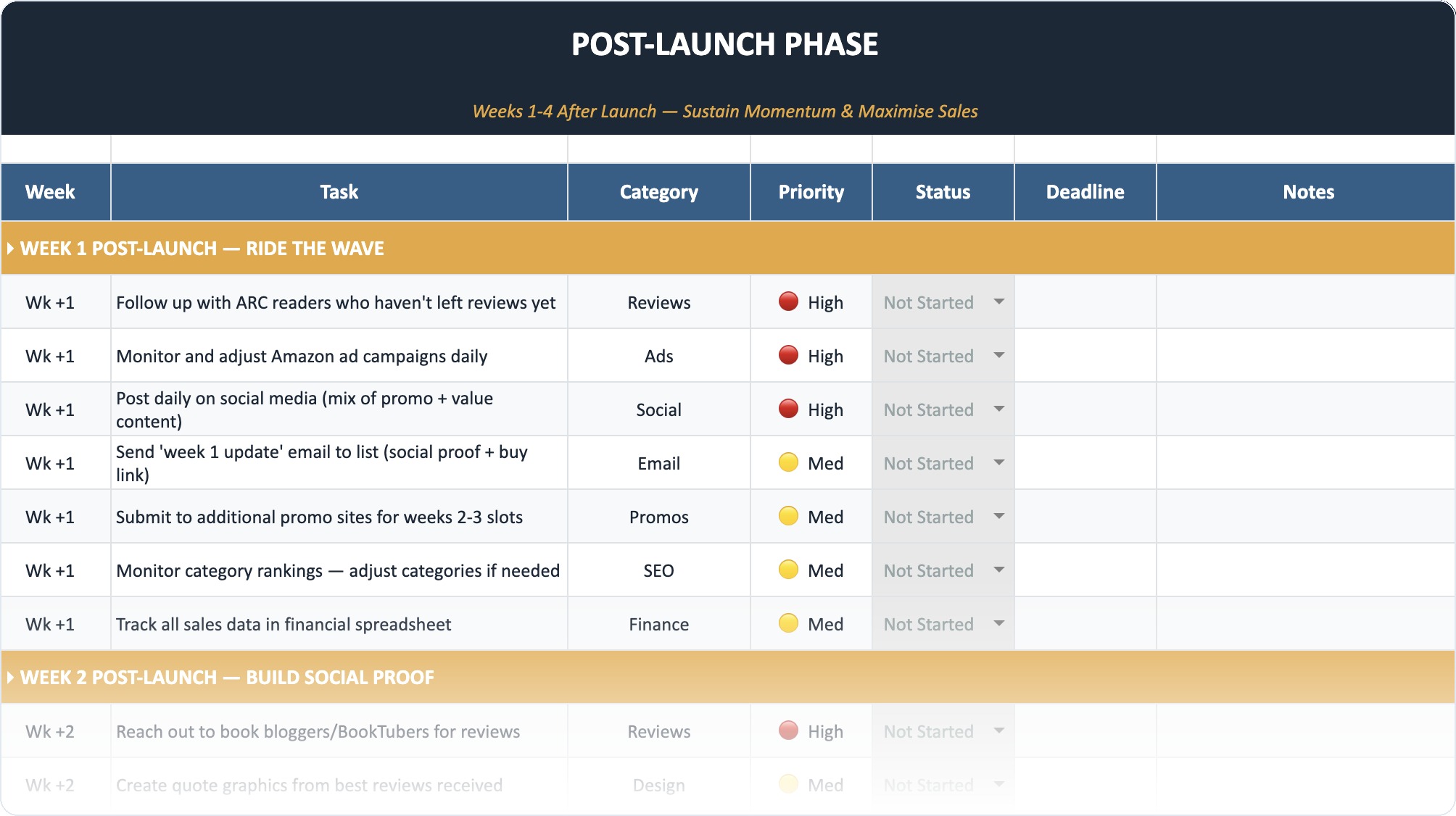
The Self-Publishing Launch Checklist (2026)
A week-by-week spreadsheet that walks you through every step of launching your book. Available as an Excel file and Google Sheet.
Stop Staring at a Blank Page
Publy is a distraction-free book editor with AI built in. Brainstorm plot ideas, get instant chapter reviews, or rewrite clunky paragraphs. 3 million free words included.

Frequently Asked Questions
How often should I use cliffhangers?
Don't end every chapter with a life-or-death cliffhanger. This can exhaust the reader. Use major cliffhangers at key plot points. Use smaller, more subtle hooks (like an unanswered question or an ominous line) for in-between chapters to maintain momentum without causing fatigue. The goal is a rhythm of tension and release.
Can a cliffhanger be too cruel to the reader?
Yes. A cliffhanger that feels like a cheap trick or a "cop-out" can break reader trust. For example, ending a book with the hero about to die, only to have them miraculously saved in the first sentence of the next book, feels unearned. The resolution must be satisfying and logical within the story's rules.
What's the difference between a chapter cliffhanger and a book cliffhanger?
A chapter cliffhanger creates an immediate need to turn the page. Its resolution is expected in the next chapter or two. A book cliffhanger is much bigger. It leaves a major arc of the entire story unresolved, creating a desperate need for the next book in the series. They operate on the same principle but at vastly different scales. Before you even get to this point, having a strong foundation is everything, which is why our guide on how to write your first book is a must-read.
Do cliffhangers work in literary fiction?
Absolutely, though they're often more subtle. Instead of physical peril, a literary cliffhanger might end on a profound emotional realization, a difficult moral choice, or a sentence that reframes a character's entire past. The goal is the same: to create an unresolved tension that pushes the reader forward.
How do I recover if a cliffhanger falls flat?
First, get feedback to figure out why it didn't work. Was it predictable? Were the stakes too low? Did it feel unearned? The fix is usually to go back and strengthen the setup. Increase the stakes, foreshadow the event more clearly, or tie the outcome more directly to the character's central emotional journey.