

When it comes to writing, the third person is one of the most commonly used points of view. This point of view allows readers to get inside the heads of multiple characters and can make stories more immersive and engaging.
But, how do you write third person? When should you use the third person instead of the first or second? We will answer all of those questions in this blog post and more!
What Is Writing In Third Person?
Writing in the third person point of view is when the writer tells the story using third-person pronouns like “he” or “she”.
It gives the story a more objective perspective and can be less confusing for the reader.
When done well, it can make the story more engaging by giving the reader a different perspective on the events.
However, some people struggle to write in the third person, as they have to keep track of the thoughts and actions of all the different characters in the story.
This may not sound like a difficult task; however, you need to once you decide to write in third person, you need to remain consistent throughout the entire story.
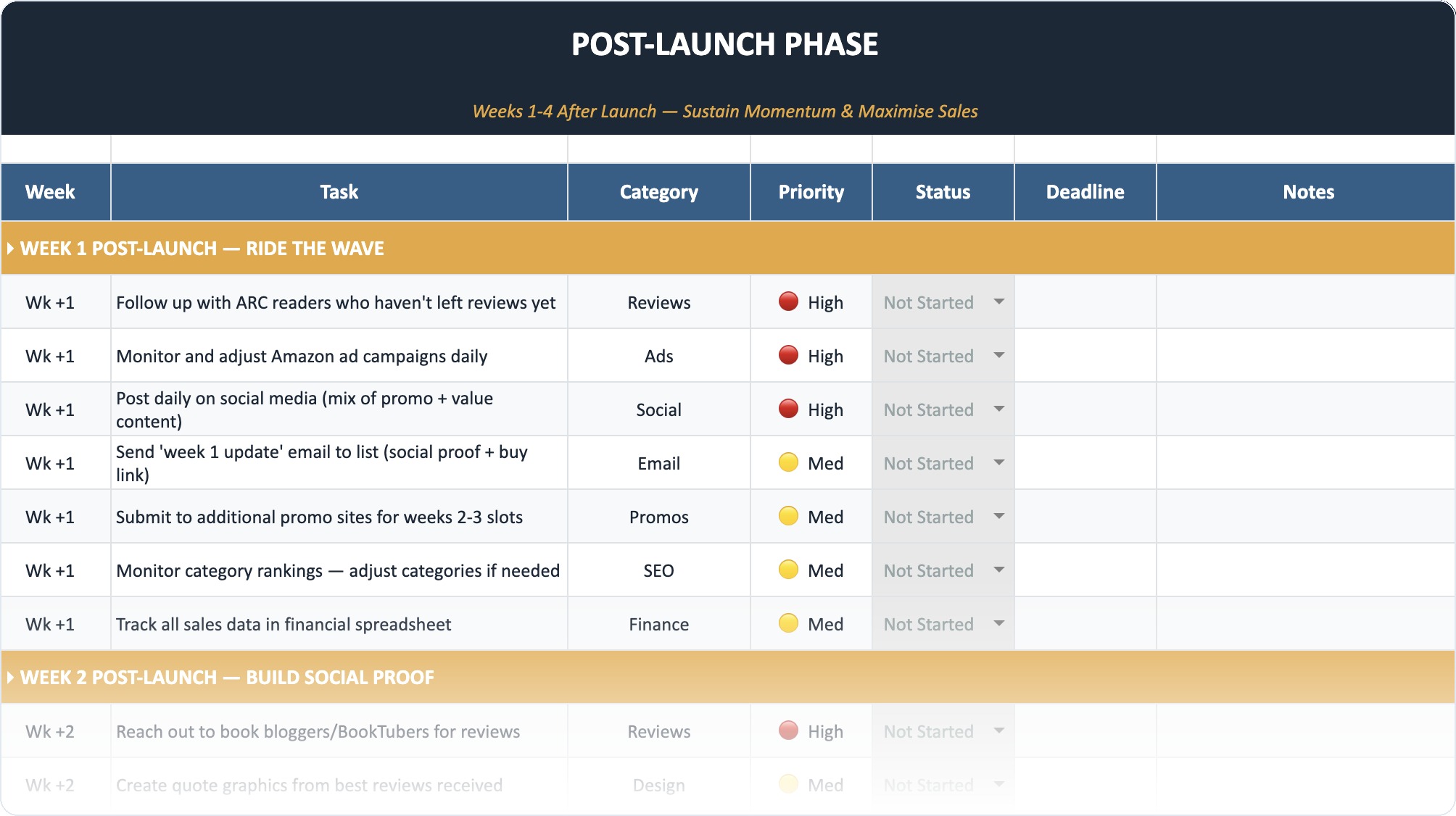
The Self-Publishing Launch Checklist (2026)
A week-by-week spreadsheet that walks you through every step of launching your book. Available as an Excel file and Google Sheet.
How to Write in Third Person About Yourself

When writing about yourself in the third person, it’s important to maintain a consistent point of view. You don’t want to switch back and forth between the first and third person within the same sentence or paragraph.
To stay in the third person, use pronouns like “he,” “she,” and “it,” and avoid using words like “I” and “me.” For example, you might write, “She went for a run this morning” instead of “I went for a run this morning.”
It can be helpful to think of yourself as if you’re someone else observing yourself from the outside. This will help you stay in the third person when describing your own actions and thoughts.
When Should You Write In Third Person?

Now that you know how to write in third person point of view, when should you use third person?
The third person point of view is most commonly used in fiction writing, but it can also be used when writing non-fiction or even when writing about yourself.
If you’re not sure whether or not to write in third person, consider these three factors:
– Who is your audience?
– What tone do you want to set?
– What point of view will best suit your story?
If you’re writing for a professional or academic audience, third person is often the best choice. It can help you sound more objective and less biased.
If you’re writing a more personal piece, such as a memoir, you might want to consider writing in a first-person point of view. This will allow you to share your personal thoughts and experiences more directly with the reader.
When it comes to setting a tone, third person can be either formal or informal. It all depends on how you use pronouns and other third-person words.
For example, using third-person pronouns like “they,” “them,” and “their” can make your writing sound more objective.
On the other hand, using third-person pronouns like “he,” “she,” and “him” can make your writing sound more personal.
Ultimately, the best point of view for your story will be the one that allows you to tell your story most effectively.
How to Write in Third Person Omniscient
There are a few things to keep in mind when writing in third person omniscient point of view. First, you need to know everything about your story and all of its characters.
This can be difficult to do if you haven’t planned everything out ahead of time. It’s important to have a clear understanding of the plot and all of the motivations for each character before beginning to write.
Second, while it is called “third-person omniscient,” this doesn’t mean that the narrator knows everything about every character.
The narrator can only know what each individual character knows. This is important to remember when writing dialogue and internal thoughts for each character. What one character knows will be different from what another character knows.
Stop Staring at a Blank Page
Publy is a distraction-free book editor with AI built in. Brainstorm plot ideas, get instant chapter reviews, or rewrite clunky paragraphs. 3 million free words included.

Why Do Authors Write in Third Person?
Many authors choose to write in third person point of view because it gives them a greater sense of objectivity. When an author writes in first person, they can only relate events that they personally experienced or witnessed.
However, when an author writes in third person, they can include events that took place outside of their own experience.
This can be particularly useful for historical fiction or other genres that rely heavily on research. In addition, third person point of view can help to create a more omniscient narrator, which can be beneficial for certain types of stories.
Finally, some authors simply find it easier to write in third person point of view because it allows them to distance themselves from their characters.
Whatever the reason, it is clear that there are many advantages to writing in a third person point of view.
Are Biographies Written in Third Person?

Yes. A biography is written in third person to provide a more objective and detached perspective of the subject. It allows readers to get a more holistic understanding of the person’s life without being filtered through the subjective lens of the author.
Third person point of view can be helpful for biographers because it allows them to explore different aspects of their subject’s life without becoming emotionally attached or invested in one particular perspective.
It also provides a broader scope for storytelling, as opposed to first or second person which tend to be more limited in focus.
An autobiography, on the other hand, is usually written from a first-person point of view. This is because an autobiography is typically more personal and intimate than a biography.
The author wants readers to feel as though they are getting to know them on a personal level, and third-person would not allow for that same level of connection.
However, there are exceptions to every rule. If an author feels more comfortable or believes that their story will be better served by writing in third person, then they are certainly free to do so.
There is no hard and fast rule that says biographies must be written in the third person and autobiographies must be written in the first person. It ultimately comes down to the author’s preference.
Stick with third person limited if you’re writing your first novel. It gives readers intimacy with one character while keeping the flexibility to switch viewpoints between chapters. Most best-selling authors — from J.K. Rowling to Brandon Sanderson — use this technique.
[quote author=”Stephen King”]Description begins in the writer’s imagination, but should finish in the reader’s.[/quote]
Frequently Asked Questions
What are the three types of third person?
The three types are: third person limited (follows one character’s thoughts per scene), third person omniscient (an all-knowing narrator who sees everyone’s thoughts), and third person objective (a camera-like narrator that only reports what’s seen and heard, with no inner thoughts). Limited is the most popular in modern fiction.
Can you switch between third person and first person?
Technically yes, but it’s tricky and can confuse readers. Some authors use first person for one character and third for others (e.g., alternating chapters). If you do this, be consistent and make sure readers can always tell whose perspective they’re in.
What’s the difference between third person limited and omniscient?
In limited, the narrator only knows what one character thinks and feels per scene. In omniscient, the narrator knows everything about all characters at once — their thoughts, motivations, and backstory. Limited feels more intimate; omniscient feels more epic.
Is third person better than first person?
Neither is objectively better — it depends on your story. Third person offers more flexibility (you can show multiple characters’ perspectives) and feels more natural for epic/fantasy genres. First person creates deeper intimacy and works well for personal, voice-driven stories like memoirs or YA.
How do you avoid head-hopping in third person?
Head-hopping is switching between characters’ thoughts within the same scene — it’s the most common third person mistake. To avoid it: stick with one POV character per scene or chapter, use scene breaks (a blank line or symbol like ***) when switching, and signal the new POV character in the first sentence after the break.