
You have finally typed "The End." The world-building is done, the magic system has rules (mostly), and your protagonist has completed their arc. But now you face a terrifying question: Does any of this actually make sense to another human being?
I know that feeling well. You have lived in your fantasy world for so long that you can’t tell if your lore is fascinating or just a confused info-dump. This is where you need to find beta readers for fantasy novels. You do not need a yes-man, and you certainly do not need a grammar checker right now. You need a reader who understands the genre, knows what "romantasy" readers expect, and isn't afraid to tell you that Chapter 4 is dragging.
In this guide, I will walk you through exactly where to find these mythical creatures, how to vet them, and whether you should open your wallet for professional beta reading services or stick to free critique partners.
- Reddit and Goodreads remain the top free hubs, specifically subreddits like r/BetaReaders and r/fantasywriters where critique swaps are the currency.
- Paid services are worth it if you are on a tight deadline or have a very long epic fantasy that volunteers struggle to finish.
- Vetting is non-negotiable; use a questionnaire to ensure they actually read fantasy and understand your sub-genre (like high fantasy vs. urban fantasy).
- Romantasy is dominating the market, so finding readers specifically versed in this sub-genre is vital for commercial success in 2026.
The Fantasy Beta Reader Landscape in 2026
The market has shifted significantly over the last few years. If you are writing fantasy today, you are likely dealing with a highly educated readership that knows their tropes. The rise of "BookTok" has created massive surges in sub-genres like Romantasy.
According to recent market data, the fantasy and science fiction genres generate over $590 million annually in the US alone. That is a massive audience, but it also means competition is fierce. You cannot afford to launch a book that hasn't been battle-tested.
Why Fantasy Needs Specific Readers
You cannot just give your manuscript to your mom or a friend who only reads thrillers. Fantasy has unique requirements:
- World-Building Consistency: Does your magic system break its own rules in Act 3?
- Pacing in Epic Scopes: Fantasy novels are often longer (100k+ words). Keeping a reader engaged through that length requires distinct pacing skills.
- jargon and Names: Are your character names unpronounceable? Is the lore overwhelming?
I often see authors make the mistake of casting a wide net. They ask for "any readers." This is a disaster. You need someone who knows the difference between a soft magic system and a hard one.
Free Places to Find Beta Readers
If you are working with a limited budget, the writing community is your best asset. There are thousands of writers and avid readers willing to read your work for free, usually in exchange for you reading theirs.
1. Reddit Communities
Reddit is arguably the most active place to find feedback right now. The users are blunt, honest, and generally well-read in the genre.
- r/BetaReaders: This is the gold standard. You post a "blurb" of your story, word count, and what kind of feedback you want.
- Pro Tip: Use the "Critique Swap" tag. You are 10 times more likely to get a response if you offer to read their manuscript in return.
- r/fantasywriters: This is specific to our tribe. You can post casual requests here or join their weekly critique threads.
- r/PubTips: While mostly for query letters, the community here is sharp. Sometimes you can find a critique partner (CP) here if your concept is strong enough.
When posting on Reddit, follow the strict formatting rules. A post titled "Read my book please" will get ignored. A post titled "Complete: 110k Epic Fantasy, seeking feedback on pacing and magic system" will get clicks.
2. Goodreads Groups
Goodreads can be clunky to navigate, but the groups are full of dedicated readers. Look for groups specifically named "Beta Readers & Critique Partners" or "Fantasy Writers."
The advantage of Goodreads is that you can see the reader's bookshelf. If they have rated five other books in your specific niche (e.g., Grimdark or Cozy Fantasy) highly, you know they are your target audience.
3. Dedicated Writing Platforms
There are platforms built specifically to gamify the critique process.
- Scribophile: This site operates on a karma system. You critique others' chapters to earn points, which you then spend to post your own work. It guarantees you get feedback. The downside is it can be slow if you have a full novel ready to go.
- Storyfolk: A newer entrant that focuses on connecting writers with beta readers and ARC (Advance Reader Copy) teams.
For a deeper dive into where writers hang out online, check out this list of top 10 writers forums for authors to find the community that fits your vibe.
4. Twitter (X) and Instagram
The writing community on social media is vast. Hashtags like #WritingCommunity, #BetaReaders, and #FantasyWriters are active.
- The Strategy: Do not just tweet "I need readers." Create a graphic with your book's aesthetic (very popular for fantasy). Post your hook. Ask for a swap.
- BookTok: If you are writing Romantasy, TikTok is essential. There are creators who strictly review indie fantasy. Reaching out to smaller accounts (under 5k followers) can sometimes yield a beta reader who is just excited to read something new before it is published.
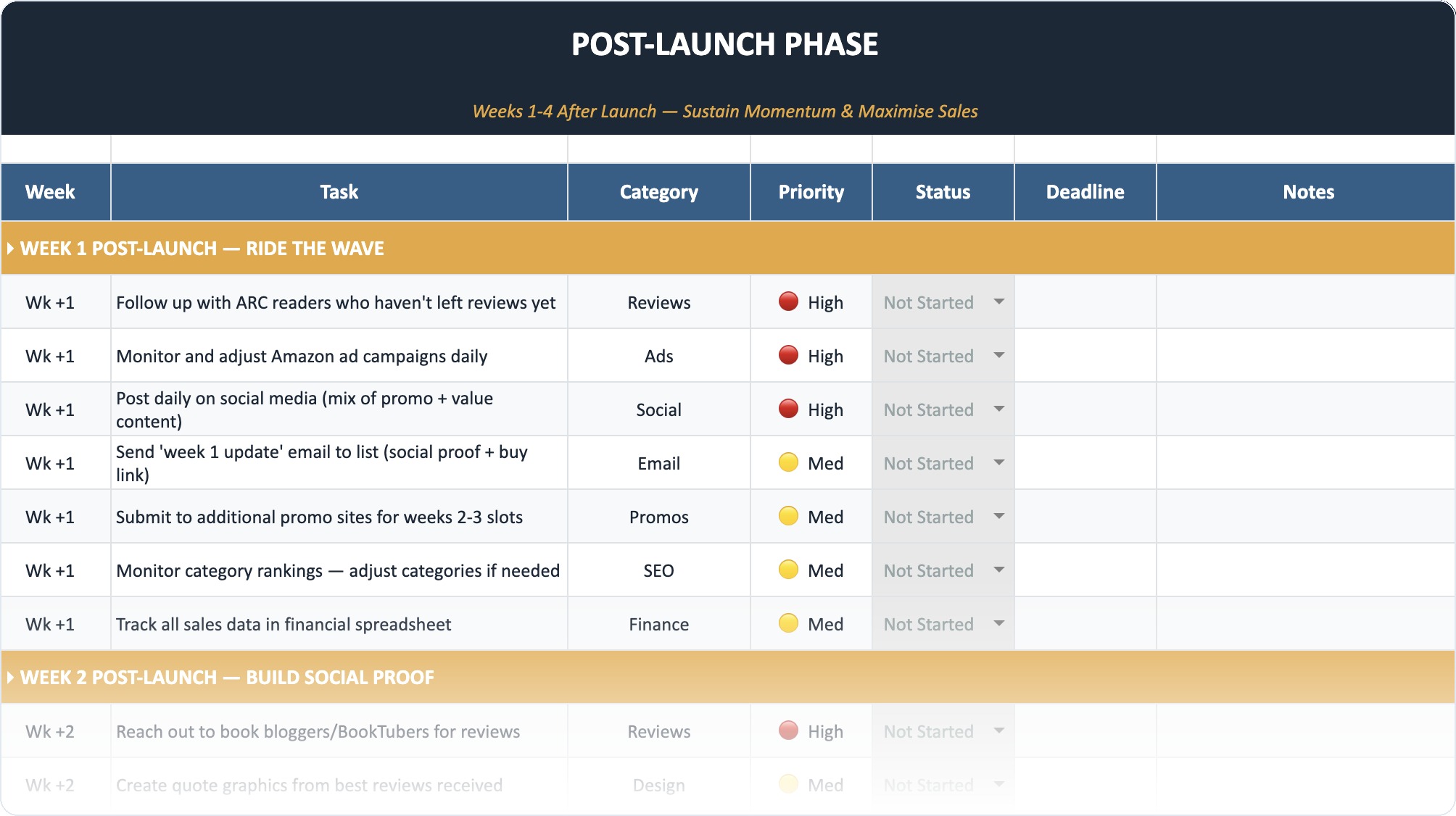
The Self-Publishing Launch Checklist (2026)
A week-by-week spreadsheet that walks you through every step of launching your book. Available as an Excel file and Google Sheet.
Paid Beta Reading Services
Sometimes, free is too expensive. The "cost" of free beta readers is often your time (reading their book in return) or the frustration of being ghosted.
If you have the budget, hiring a professional can save you months of waiting.
When Should You Pay?
- Tight Deadline: You plan to publish in three months. You cannot wait for a volunteer to read 3 chapters a week.
- Specific Expertise: You need a sensitivity reader for a specific culture represented in your fantasy world, or a historian to check your medieval weaponry accuracy.
- The "Flake" Factor: Paid readers rarely ghost you. They are contractually obligated to finish.
Cost Expectations
How much does this cost? It varies wildly.
- Freelancers (Fiverr/Upwork): You can find readers for $20 to $100. Quality varies significantly.
- Professional Services: dedicated companies or high-end freelancers may charge $150 to $500 for a full detailed report on a massive fantasy novel.
According to market research on service pricing, beta reading costs can range significantly based on word count and turnaround time, with many professionals charging premiums for expedited delivery.
The Professional Difference
A paid beta reader usually provides a "Reader Report." This is not just inline comments. It is a 2-5 page document breaking down:
- Character Arc strength.
- Plot Holes.
- Pacing graphs.
- Reader emotion tracking (e.g., "I was bored here," "I was crying here").
If you are unsure whether you need a beta reader or a full editor, you might want to look at the differences in hiring professionals. For instance, understanding the trade-off between platforms is key, as seen in this comparison of hiring an editor on Reedsy vs Fiverr.
Beta Readers vs. Critique Partners vs. Editors
It is easy to mix these up, but they serve different roles in your pipeline.
| Role | When to use | Primary Focus | Cost |
|---|---|---|---|
| Alpha Reader | First Draft (messy) | "Does this concept work?" | Usually Free (Spouse/Best friend) |
| Critique Partner (CP) | Second Draft | Craft, prose, plot mechanics | Free (Swap system) |
| Beta Reader | Polished Draft | Reader reaction, pacing, enjoyment | Free or Paid |
| Editor | Final Draft | Grammar, structure, polish | Paid ($$$) |
Critique Partners are fellow writers. They will tell you "Your point of view shifts here are jarring."
Beta Readers are readers. They will tell you "I stopped caring about the hero in Chapter 10."
You need the beta reader to simulate the market. You need the CP to help you fix the technical craft issues the beta reader identified.
Stop Staring at a Blank Page
Publy is a distraction-free book editor with AI built in. Brainstorm plot ideas, get instant chapter reviews, or rewrite clunky paragraphs. 3 million free words included.

How to Vet and Manage Beta Readers
Finding them is step one. Getting useful data out of them is step two.
The Screening Process
Do not send your full 120k-word manuscript to a stranger immediately.
- Send the First 3 Chapters: Ask them to read just the start.
- Ask One Specific Question: "Did the prologue hook you?"
- Check the Vibe: Did they respond on time? Was the feedback constructive or just "it's nice"?
If they pass this test, send the rest.
The Questionnaire
Never ask "What did you think?" You will get useless answers like "It was good!" You need actionable data.
You should prepare a document with specific questions broken down by act.
- Act 1: Was the world-building confusing?
- Act 2: Did the middle drag? Did the magic system feel consistent?
- Characters: Which character did you want to kill off (that I didn't intend to be hated)?
I highly recommend using a structured approach to questioning. You can find a great list of 20 questions for beta readers that will help you extract the deep insights you need to improve your story.
Setting Deadlines
Fantasy novels are long. If you do not set a deadline, your beta reader might take six months.
- Reasonable Timeline: 3 to 4 weeks for a 100k novel.
- Check-ins: Ask for an update halfway through.
The "Romantasy" Boom and Sub-Genre Specifics
We cannot talk about fantasy in 2026 without addressing the elephant (or dragon) in the room: Romantasy.
This sub-genre has exploded, driven largely by social media trends. If your book falls into this category, your beta reader search must be targeted. A "Classic High Fantasy" reader might hate your book because it focuses too much on romance. A "Romance" reader might hate it because there is too much war strategy.
You need readers who exist in the overlap.
Key Stats:
The fantasy market is growing rapidly, with specific sub-genres leading the charge. Recent data indicates that fantasy book sales grew by over 45% in recent years, making it a lucrative but crowded field. You must ensure your beta readers are current with these trends.
Preparing Your Manuscript
Do not send a raw draft. It is disrespectful to your reader's time.
- Self-Edit: Run spell check. Fix the massive plot hole you already know about.
- Formatting: Make it readable. Use a standard font like Times New Roman, 12pt, double spaced. If you send a text block with no paragraphs, they will quit on page one.
If you are unsure how to make your document look professional before sending it out, review this guide on how to format your book in Microsoft Word. A clean manuscript gets better feedback because the reader isn't distracted by formatting errors.
Red Flags and Warning Signs
Be careful out there. While most people in the writing community are wonderful, there are bad actors and just plain bad matches.
- The Rewriter: This reader wants to write their story using your characters. They will suggest changing your entire voice. Ignore them.
- The Ghost: They take your book and never reply. This happens. It hurts, but move on.
- The Pirate: Authors fear their work being stolen. While rare, it is a fear. Protection: Only share PDF or read-only Google Docs if you are worried. Do not send an editable Word doc to a stranger unless you trust them.
- The "Mean" Critic: There is a difference between honesty and cruelty. "This chapter is boring" is helpful. "You are a terrible writer" is not.
Tools to Manage Feedback
When you have 5 beta readers, you will have 5 different opinions. One hates the love interest; one loves him. One thinks the pacing is fast; one thinks it is slow.
How do you manage this?
- Google Forms: Create a survey for each section of the book. It collates the answers into a spreadsheet.
- Collaborative Docs: Google Docs allows readers to comment inline.
- BetaReader.io: A dedicated platform that tracks where readers stop reading. If 3 readers stop at Chapter 7, you have a problem at Chapter 7.
This digital-first approach is vital because the consumption of books is changing. With the number of ebook readers expected to reach 1.1 billion by 2028, your beta process should mimic the digital reading experience.
Building Long-Term Relationships
The holy grail is finding a beta reader who sticks with you for your whole career. Treat them like gold.
- Thank them profusely. Mention them in your acknowledgments.
- Offer value back. If they write, critique their work. If they don't, offer a free signed copy of the paperback when it launches.
Finding beta readers for fantasy is not a one-time task; it is about building a team that helps you craft the best story possible.
Frequently Asked Questions
How many beta readers do I need?
You generally want between 3 and 5 beta readers. Less than 3, and you might get skewed opinions. More than 10, and you will likely face "feedback paralysis" where conflicting opinions make it impossible to edit.
Should I pay for beta readers?
You should pay if you need a guaranteed turnaround time or specific professional feedback. For most debut authors, finding free critique partners via swaps is a better way to learn the craft and save money.
What if a beta reader hates my book?
Do not panic. Ask yourself why they hated it. Was it the genre? Then they were the wrong reader. Was it the pacing? Then you might need to edit. If only one person hates it and four love it, it is likely an outlier. If everyone hates it, you have work to do.
Can beta readers steal my idea?
This is extremely rare. Ideas are cheap; execution is hard. Most beta readers are writers busy with their own ideas. However, keep a paper trail (emails, dates) of your work just in case.
What is the difference between alpha and beta readers?
Alpha readers see the story while it is being written or in its raw first draft state. They look for major plot holes. Beta readers see a polished version that is nearly ready for publication.