
* Best Starting Point: Jurassic Park (for the blockbusters) or The Andromeda Strain (for the pure science).
- Total Count: Crichton published 18 novels under his own name, 10 under pseudonyms (John Lange, Jeffery Hudson), and 4 posthumous works.
- Latest Release: Eruption (2024), a manuscript finished by James Patterson.
- The Vibe: High-concept techno-thrillers, medical mysteries, and historical adventures driven by deep research.
You’ve seen the dinosaurs. You’ve probably watched the doctors in the ER. But reading Michael Crichton is a different beast entirely. While Hollywood loves his high-concept ideas, the books offer a level of granular detail and scientific "what ifs" that a two-hour movie just can't capture.
Navigating his bibliography can be tricky. You have the famous techno-thrillers, sure. But then you have a decade of pulp crime novels written while he was in medical school under the name John Lange. You have historical fiction. You have books released years after his death in 2008.
Whether you are here to see where Sphere fits in or you want to track down the hard-to-find John Lange mysteries, this guide breaks it all down. We cover the publication order, the chronological order, and the specific series you need to know.
Who Was Michael Crichton?
Before we get to the list, it helps to understand the man. Michael Crichton wasn't just a writer; he was a Harvard Medical School graduate who decided he’d rather tell stories than treat patients. This background is the secret sauce. It’s why his science fiction feels frighteningly plausible.
He invented the "techno-thriller" genre as we know it today. He took complex technical jargon—genetics, nanotechnology, chaos theory—and made it readable for the masses. According to the official Michael Crichton website, his ability to blend science with fiction led to him being one of the only people to ever have the number one movie, number one TV show, and number one book simultaneously.
Stop Staring at a Blank Page
Publy is a distraction-free book editor with AI built in. Brainstorm plot ideas, get instant chapter reviews, or rewrite clunky paragraphs. 3 million free words included.

Michael Crichton Books in Publication Order
Most fans agree that publication order is the best way to experience his evolution. You can see him move from short, punchy crime novels to the sprawling, research-heavy epics he became famous for.
The Early Years (Pseudonyms & Pulp)
In the late 60s and early 70s, Crichton was churning out books to pay for med school. He wrote fast. If you are wondering how long it takes to write a book on average, Crichton was smashing that average, sometimes finishing drafts in days. He used pen names like John Lange and Jeffery Hudson because he didn't want his patients to worry that their future doctor was writing thrillers about botched abortions and heist crews.
Odds On (1966)
Writing as John Lange


This is where it started. A computer-planned robbery at a hotel on the Costa Brava. It’s rougher than his later work, but you can already see his fascination with technology and systems failing.
Scratch One (1967)
Writing as John Lange

A case of mistaken identity leads a lawyer into a deadly game of spies in Europe. It's very James Bond-lite, which makes sense given the era.
Easy Go (1968)
Writing as John Lange
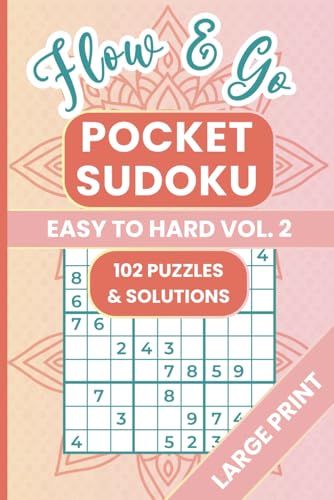
Also published as The Last Tomb. An Egyptologist discovers a hidden pharaoh's tomb and decides to rob it. It’s an adventure story that hints at the historical research he would later master.
A Case of Need (1968)
Writing as Jeffery Hudson

This is the standout of his early work. It won an Edgar Award. It’s a medical thriller about a pathologist investigating a botched abortion in a prominent medical family. It’s tense, accurate, and was his first real step toward the "medical thriller" genre.
The Andromeda Strain (1969)
First novel as Michael Crichton

This is the breakout. A military satellite crashes in a small town, bringing back a deadly extraterrestrial microorganism. A team of scientists in a secret underground lab has to contain it. This book established the "Crichton formula": a crisis, a ticking clock, and smart people using science to try (and often fail) to stop it.
The Venom Business (1969)
Writing as John Lange
A smuggler gets caught up in a plot involving snakes and inheritance. It’s rare and a bit of a collector's item now.
Zero Cool (1969)
Writing as John Lange

An American radiologist on vacation in Spain gets forced into performing an autopsy for a gang war.
Grave Descend (1970)
Writing as John Lange
A deep-sea diver is hired to salvage a yacht, but nothing is what it seems. It earned another Edgar Award nomination.
Drug of Choice (1970)
Writing as John Lange

Also known as Overkill. It deals with a mysterious corporation creating a literal "vacation" experience that is drug-induced. It feels like a very early, trippy prototype for Westworld.
Dealing: Or the Berkeley-to-Boston Forty-Brick Lost-Bag Blues (1970)
Writing as Michael Douglas (with brother Douglas Crichton)

A counter-culture comedy about pot smuggling. Very different from his other works and definitely a product of 1970.
Binary (1972)
Writing as John Lange

A high-stakes thriller about a political radical threatening to release nerve gas in San Diego during the Republican National Convention. Crichton actually directed the TV movie adaptation of this one (called Pursuit).
The Terminal Man (1972)
A man suffering from violent seizures gets a computer chip implanted in his brain to control them. Naturally, the technology goes wrong. This explores mind control and the merger of man and machine long before Neuralink was a headline.
The Golden Era (1975–1999)
This is the period that made him a household name. He moved away from the short pulp novels and started writing longer, more ambitious stories. Many authors worry about using a pen name when self-publishing, but Crichton showed you can eventually shed the pseudonym and let the work stand on its own.
The Great Train Robbery (1975)
A massive pivot. This is a historical heist novel set in Victorian England. It is stylish, fun, and meticulously researched. It proves he wasn't just a "science guy."
Eaters of the Dead (1976)
Later retitled The 13th Warrior. Crichton wrote this on a bet that he couldn't make Beowulf entertaining. He framed it as a "found manuscript" from an Arab traveler, Ibn Fadlan. It is a masterclass in blending real history with myth.
Congo (1980)
Explorers, a talking gorilla named Amy, and killer gray apes guarding a diamond mine. It’s King Solomon’s Mines updated for the computer age.
Sphere (1987)

Scientists find a spaceship on the ocean floor that has been there for 300 years. Inside, they find a perfect sphere that manifests their worst fears. It’s a psychological thriller masquerading as sci-fi.
Jurassic Park (1990)

The big one. Genetic engineering brings dinosaurs back. Chaos theory dictates they will escape. If you've only seen the movie, you need to read the book. It is darker, bloodier, and Hammond is not a nice old man—he's a greedy capitalist oblivious to the danger he created.
Rising Sun (1992)

A murder mystery set in the LA headquarters of a Japanese corporation. It caused controversy upon release for its depiction of US-Japan trade relations, but as a murder mystery, it’s incredibly tight.
Disclosure (1994)

Crichton flips the script on sexual harassment, featuring a male protagonist harassed by a female executive. It plays out like a corporate thriller involving virtual reality files and office politics.
The Lost World (1995)
The only sequel Crichton ever wrote. Ian Malcolm returns (yes, he survived the first book, barely) to visit "Site B," the factory floor where the dinosaurs were made.
Airframe (1996)
There are no monsters here, just a plane that experienced severe turbulence, leaving passengers dead and injured. A dedicated investigator has to figure out if it was pilot error or a design flaw. It turns the aerospace industry into a high-stakes battleground.
Timeline (1999)
Quantum technology allows historians to travel back to 14th-century France. They get stuck in the middle of a war. It’s knights, castles, and quantum physics.
The Modern Era (2000–2006)
In his final years, Crichton continued to push buttons, tackling nanotechnology, climate change, and genetics.
Prey (2002)
Nanotechnology swarms escape a lab in the Nevada desert. They evolve, learn, and start hunting humans. It is terrifying and fast-paced.
State of Fear (2004)

Eco-terrorists manufacture disasters to keep funding flowing. This is his most controversial book due to its stance on climate change data, but it remains a bestseller in his bibliography.
Next (2006)

A sprawling narrative about genetic ownership. Who owns your cells? Who owns your DNA? It weaves multiple storylines together, featuring talking parrots and bounty hunters tracking down human genes.
Posthumous Michael Crichton Books
Crichton left behind a treasure trove of finished and unfinished manuscripts on his hard drives. Publishers have been releasing these slowly, often bringing in other big-name authors to finish the job.
Pirate Latitudes (2009)

Found complete after his death. It’s a straight-up heist adventure set in 1665 Jamaica. No sci-fi, just pirates, gold, and the Kraken (sort of).
Micro (2011)
Completed by Richard Preston

Graduate students are shrunk down to half an inch tall and left in a Hawaiian rainforest. It’s Honey, I Shrunk the Kids but brutal and violent. Richard Preston, known for The Hot Zone, finished the manuscript.
Dragon Teeth (2017)

A historical novel set during the "Bone Wars" of the American West. It follows a Yale student caught between rival paleontologists Marsh and Cope.
Eruption (2024)
Completed by James Patterson
The most recent release. A massive volcanic eruption in Hawaii threatens to trigger a secret military doomsday cache. According to reports from the Associated Press, James Patterson was brought in to complete Crichton’s unfinished manuscript, creating a blockbuster collaboration years in the making.
Series Breakdown: Jurassic Park
While most of his books are standalones, the Jurassic Park duology is essential reading.
1. Jurassic Park (1990)
The collapse of the park.
2. The Lost World (1995)
The expedition to the breeding site.
Note on Reading Order: You must read Jurassic Park first. The Lost World relies heavily on the events of the first book, specifically the mathematical theories of Ian Malcolm.
How to Read Michael Crichton (Thematic Recommendations)
If you don't want to go by year, you can group his books by what you are interested in.
The "Science Gone Wrong" Starter Pack
If you want the classic techno-thriller experience where hubris meets catastrophe:
- Jurassic Park
- The Andromeda Strain
- Prey
- The Terminal Man
The Historical Adventures
If you prefer swords, guns, and history over computers:
- The Great Train Robbery
- Eaters of the Dead
- Dragon Teeth
- Pirate Latitudes
The Medical Mysteries
Given his background, these are some of his strongest works:
- A Case of Need
- Five Patients (Non-fiction, but reads like a thriller)
- The Terminal Man
The Role of Research in Crichton’s Work
One thing that separates Crichton from other thriller writers is the bibliography at the end of his fiction books. He didn't just guess; he studied. In State of Fear, he included footnotes. In Jurassic Park, he utilized cutting-edge (for the time) chaos theory and paleontological data.
Writers today often struggle to find that balance. If you are interested in how to balance fact and fiction in your writing, Crichton is the ultimate case study. He utilized "The Crichton Pause"—a moment in the narrative where the action stops so a character can explain the scientific concept driving the plot. Instead of being boring, these pauses ramped up the tension because they explained exactly why everyone was about to die.
The Self-Publishing Launch Checklist (2026)
A week-by-week spreadsheet that walks you through every step of launching your book. Available as an Excel file and Google Sheet.

Non-Fiction Works
It wasn't all made up. Crichton wrote several non-fiction books that give insight into his mind.
- Five Patients (1970): A look at hospital practices in the late 60s.
- Jasper Johns (1977): An art study of the pop artist.
- Electronic Life (1983): A book introducing people to personal computers (very dated now, but fascinating history).
- Travels (1988): An autobiography of sorts, covering his time in med school and his psychic/spiritual travels.
Why Crichton Still Matters in 2026
It is easy to look at technology from the 90s and think it is outdated. But Crichton wasn't writing about hardware; he was writing about systems. He was writing about how human error inevitably crashes complex systems.
In Westworld (which he wrote and directed as a film, though not a novel), he predicted AI rebellion. In Prey, he predicted swarm robotics. In Jurassic Park, he looked at de-extinction. Per Britannica's detailed biography, his medical background allowed him to critique the scientific community from the inside, making his warnings resonate decades later.
His books are fast. They have short chapters. They are designed to keep you up at night. If you are a writer trying to learn pacing, or simply a reader wanting to escape, the Crichton backlist is a goldmine.
Quick Comparison: Crichton vs. Contemporaries
| Feature | Michael Crichton | John Grisham | Tom Clancy |
|---|---|---|---|
| Primary Focus | Science/Tech | Law/Courtroom | Military/Espionage |
| Pacing | Very Fast | Moderate | Slow/Detailed |
| Technical Depth | High (Biology/Physics) | High (Legal) | High (Hardware) |
| Tone | Cynical/Cautionary | Justice-seeking | Patriotic |
Frequently Asked Questions
Did Michael Crichton write under any other names?
Yes, he used the pseudonym John Lange for his pulp thrillers and Jeffery Hudson for A Case of Need. He also co-wrote Dealing under the name Michael Douglas (a combination of his name and his brother Douglas Crichton's name).
What is the best Michael Crichton book to start with?
Jurassic Park is the most accessible and exciting entry point. If you want something shorter, The Andromeda Strain is a classic that defines his style perfectly without the length of his later books.
Are the John Lange books worth reading?
They are different from his later famous works. They are shorter, pulpier crime novels. If you enjoy vintage 60s spy thrillers or heist movies, they are definitely worth a read, but don't expect dinosaurs or nanotechnology.
How many Jurassic Park books are there?
There are only two novels written by Michael Crichton: Jurassic Park (1990) and The Lost World (1995). Any other Jurassic-related books are movie tie-ins or spin-offs by other authors not directly connected to his original canon.
Who finished Michael Crichton's unfinished books?
Micro was finished by Richard Preston. Eruption was completed by James Patterson. Pirate Latitudes and Dragon Teeth were found in a mostly complete state and required less external intervention.