

You have spent months, maybe years, writing your book. The manuscript is finally done. Now you face the physical reality of turning that digital file into a brick-and-mortar object. You want a hardcover that feels like it belongs on a Barnes & Noble shelf, not something that screams "I made this in my garage."
For most authors in 2026, the choice comes down to the two heavyweights: Amazon KDP (Kindle Direct Publishing) and IngramSpark.
I have printed thousands of books through both platforms. I have seen the glue, felt the paper, and scrutinized the ink under good lighting. The short answer? KDP is faster and easier, but IngramSpark is the only way to get a true "bookstore quality" hardcover with a dust jacket. However, the gap is closing, and the nuances in paper weight and print tech might surprise you.
We are going to break down every single component of kdp vs ingramspark hardcover quality so you can decide exactly where to spend your printing budget.
- Binding & Cover: IngramSpark wins by offering dust jackets and cloth binding options. KDP only offers case laminate (hardcover with printed image).
- Paper Quality: KDP uses slightly thicker 55lb paper, which feels more substantial. IngramSpark uses industry-standard 50lb paper that is thinner but creams better.
- Print Tech: KDP uses laser printing (sharper text, shiny finish). IngramSpark uses inkjet (richer colors, matte look, slightly softer text).
- Distribution: IngramSpark is essential for reaching libraries and bookstores. KDP is best for selling directly on Amazon.
The Core Difference: Print Technology
To understand the quality difference, you have to look at the machines running in the background. This is not just about "good" vs "bad" quality. It is about two completely different printing technologies.
KDP Uses Laser (Toner)
When you order a hardcover from KDP, you are essentially getting a product made with high-end laser printers. Laser printing uses toner—a dry powder that is fused onto the paper using heat.
The Result:
- Text Sharpness: The text edges are incredibly crisp. Because the toner sits on top of the paper rather than soaking in, the letters have hard, defined edges.
- Sheen: If you tilt the page under a light, you might see a slight gloss or sheen on the text and black areas. This is the melted toner.
- Durability: The toner is durable, but in rare cases of extreme page bending, it can crack microscopically.
IngramSpark Uses Inkjet
IngramSpark typically utilizes high-speed inkjet technology for its standard color and black-and-white books. Inkjet sprays liquid ink into the paper fibers.
The Result:
- Color Depth: The ink soaks into the paper fibers. This creates a "flatter," more matte look that professionals often prefer for fiction.
- Saturation: According to recent tests, IngramSpark generally offers marginally better cover saturation and vibrant color depth.
- Softness: The text might look slightly "softer" or have dithered edges (tiny dots) compared to the razor-sharp lines of laser. This is not a defect; it is a characteristic of the tech.
If your book is a text-heavy novel, KDP's laser printing actually offers slightly better readability due to the sharpness. However, if you have illustrations or want that traditional "matte ink" feel, IngramSpark's inkjet process looks more like a traditionally published book.
Stop Staring at a Blank Page
Publy is a distraction-free book editor with AI built in. Brainstorm plot ideas, get instant chapter reviews, or rewrite clunky paragraphs. 3 million free words included.

The Paper Weight Battle: 55lb vs. 50lb
Here is a detail that catches many authors off guard. You might assume the "pro" platform (Ingram) uses better paper. That is not technically true when it comes to thickness.
KDP Standard: 55-pound (90 GSM) white paper.
IngramSpark Standard: 50-pound (74 GSM) white paper.
KDP's paper is thicker. When you hold a 300-page book from KDP, it will be physically thicker and heavier than the same book printed by IngramSpark.
Why Does This Matter?
- Opacity: The 55lb paper from KDP has slightly better opacity. You see less "ghosting" (text showing through from the other side of the page) compared to the 50lb paper.
- The "Feel": Some authors love the KDP paper because it feels robust. It feels like a textbook or a high-quality manual.
- The "Trade" Look: Conversely, the 50lb paper from IngramSpark is the industry standard for trade fiction. If you pull a Stephen King novel off the shelf, the pages are likely closer to the 50lb mark. They turn easier and drape better. KDP pages can feel a bit stiff.
If you are deciding between a matte or glossy finish for your cover, also consider how the paper interacts with the reader. A stiff book with stiff paper (KDP) feels different than a flexible book with lighter paper (Ingram).
Cover Options: The Dust Jacket Factor
This is usually the dealbreaker. This single feature drives more authors to IngramSpark than any other quality metric.
KDP only offers Case Laminate.
A case laminate hardcover is where the cover art is printed directly onto the hard cardboard cover. There is no paper jacket. This is typical for children's books, textbooks, and some non-fiction. It is durable and clean, but it does not signal "prestige fiction" to a bookstore buyer.
IngramSpark offers Case Laminate AND Dust Jackets.
IngramSpark allows you to print a cloth-bound book (usually blue or gray) with a gold-stamped spine, wrapped in a full-color glossy or matte dust jacket. They also offer "Digital Cloth" (a printed texture that looks like cloth) with a dust jacket.
If your goal is to sit on a shelf in a local independent bookstore, you almost certainly need a dust jacket. A case laminate novel often screams "self-published" to industry gatekeepers.
The Jacket Flaps
With IngramSpark, you get the front and back flaps of the dust jacket. This is prime real estate. You can put your author bio, a teaser blurb, or reviews on these flaps. KDP gives you zero flap space because… well, there are no flaps.
Color Accuracy and Saturation
Color management in print on demand is notoriously difficult. You upload an RGB file, the printer converts it to CMYK, and machines vary day by day.
However, trends in 2025 and 2026 show a consistent pattern. IngramSpark's color profiles tend to be richer. KDP's covers sometimes come out looking a little "washed out" or darker than expected.
- IngramSpark: They seem to have better calibration for gradients and skin tones. If your cover has subtle lighting effects, Ingram usually reproduces them more faithfully.
- KDP: While improving, KDP covers can sometimes have a reddish or yellowish tint depending on which facility prints them. Their matte finish is very rubbery and prone to fingerprints, while Ingram’s matte finish is smoother and more resistant to scuffs.
It is worth noting that KDP uses a very specific rubberized texture for their "matte" covers. It feels velvety but attracts oils from your hands like a magnet. IngramSpark’s matte is more of a standard satin finish—less tactile, but stays cleaner.
The Self-Publishing Launch Checklist (2026)
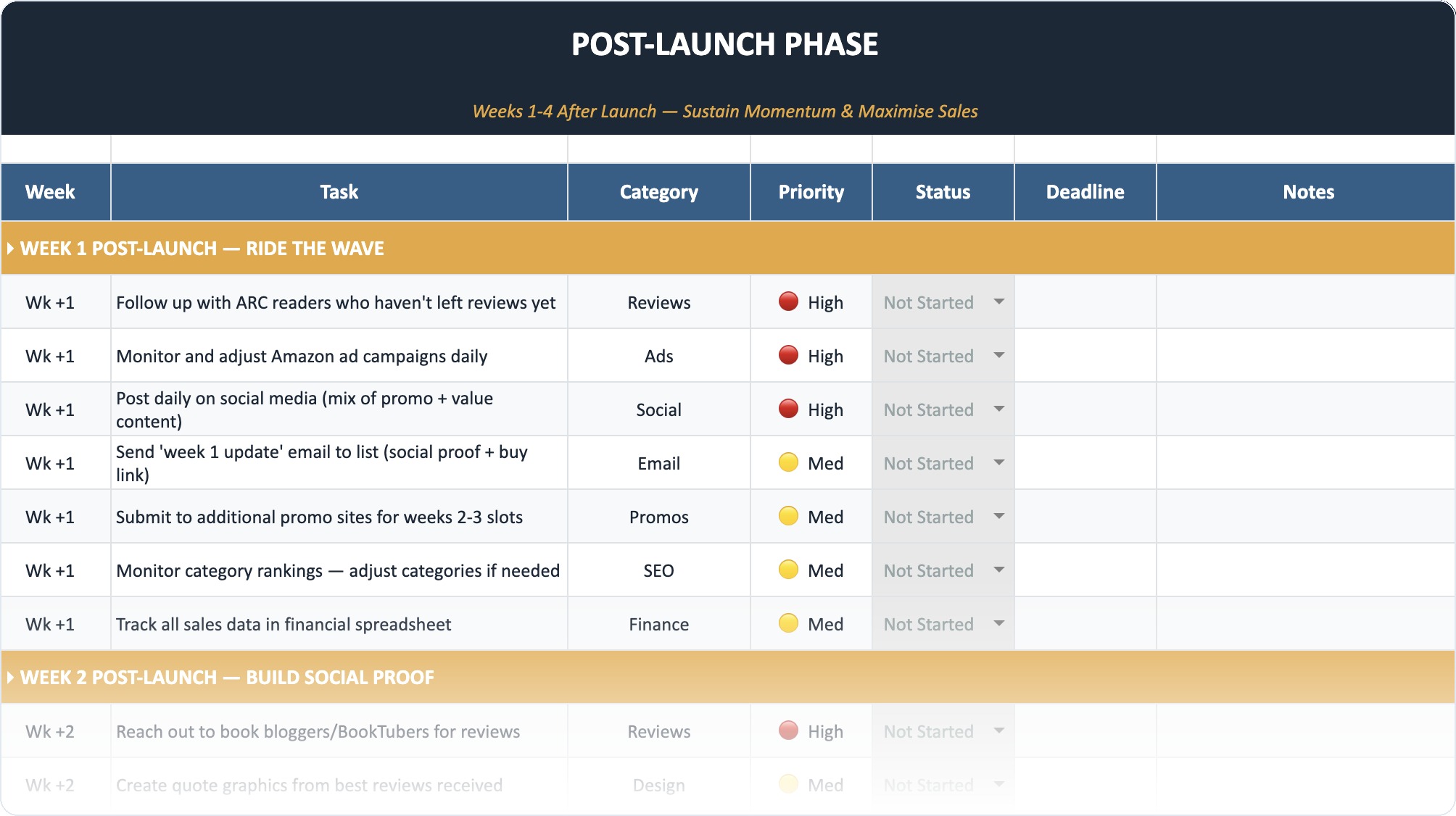
A week-by-week spreadsheet that walks you through every step of launching your book. Available as an Excel file and Google Sheet.
Binding Quality and Durability
Both platforms use adhesive binding (perfect binding) for their hardcovers. This means the pages are glued into the spine.
KDP Binding
KDP's binding is solid. In early 2023, there were reports of "wavy" pages or glue that hadn't set properly, but those issues have largely been resolved as their facilities upgraded. The hinge (the groove where the cover opens) is usually tight. However, because the 55lb paper is stiff, the book sometimes snaps shut if you don't break it in.
IngramSpark Binding
IngramSpark books generally have a more flexible glue application. The book lays slightly flatter. This is partly due to the thinner 50lb paper putting less stress on the glue, but also due to Ingram’s binding machines being tuned for "trade" standards.
A Note on "Binding Bowing":
Both platforms suffer from humidity issues. If a book is printed in a humid facility and shipped to a dry home, the cover boards can warp or bow outward. This is a physics problem, not a vendor problem. However, KDP's thicker boards seem slightly more prone to this warping than Ingram's.
Formatting and User Experience
Quality isn't just about the ink; it is about the file prep.
KDP is Forgiving.
You can upload a PDF to KDP that is slightly off-spec, and their system will often fix it or give you a visual previewer that lets you adjust it live. They want you to publish.
IngramSpark is Strict.
IngramSpark is a professional printer. If your bleed is off by 0.125 inches, they will reject the file. If your color profile is wrong, they might print it anyway and let you deal with the consequences.
This is why using the best book layout software is non-negotiable for IngramSpark. You cannot just export a Word doc and hope for the best. You need precise dimensions for the dust jacket flaps and the spine width, which changes based on the exact paper page count.
Also, IngramSpark historically charged for uploads and revisions. While they have introduced free codes and membership changes, the threat of a revision fee ($25) makes you double-check your quality. KDP allows you to re-upload your interior file 50 times a day for free if you catch a typo.
Cost Analysis: The Price of Quality
You might expect the higher quality option to cost significantly more. The math is actually complicated.
Printing Costs:
IngramSpark's print charge per unit is often slightly higher than KDP's for small runs. However, IngramSpark is changing its pricing structure in April 2025, which may make certain trim sizes more competitive.
Shipping:
This is where KDP wins. If you are ordering author copies, KDP shipping can be slow, but it is cheap. If you order retail copies with Prime, it is free.
IngramSpark shipping is expensive. A single author copy might cost $10 to print and $12 to ship. They treat shipping like a commercial freight operation, not a consumer delivery service.
Distribution:
If you want to sell in bookstores, the "quality" of your distribution data matters. KDP puts your book on Amazon. IngramSpark puts your book in the Ingram catalog, which is accessed by 40,000 retailers and libraries. A KDP hardcover with a KDP ISBN signals "amateur" to a librarian. An Ingram hardcover looks like any other book in their system.
Summary Comparison Table
| Feature | Amazon KDP Hardcover | IngramSpark Hardcover |
|---|---|---|
| Paper Weight | 55lb (90 GSM) – Thicker | 50lb (74 GSM) – Standard |
| Cover Type | Case Laminate Only | Case Laminate, Dust Jacket, Digital Cloth |
| Print Tech | Laser (Toner) | Inkjet (Liquid Ink) |
| Text Quality | Very Sharp, Glossy | Slightly Softer, Matte |
| Color Quality | Good, occasionally washed out | Excellent, deep saturation |
| Spine/Binding | Glued, stiff opening | Glued, trade flexibility |
| Distribution | Amazon focused | Global (Bookstores, Libraries) |
| Proofs | Cheap proofs available | Expensive shipping for proofs |
The Verdict: Which Hardcover Should You Choose?
The " kdp vs ingramspark hardcover quality " debate ends with a split decision based on your goals.
Choose KDP Hardcover If:
- You are selling direct to readers on Amazon. The quality is perfectly acceptable for the average reader who buys online.
- You need proof copies fast. You can iterate quickly without penalties.
- You are writing a textbook or manual. The thicker paper and sharp text are better for reference materials.
- You are on a budget. The setup is free, and you avoid the steep learning curve of file creation.
Choose IngramSpark Hardcover If:
- You want a Dust Jacket. This is the only way to get that premium look.
- You aim for bookstores. Retailers need the wholesale discount and returnability options that only Ingram provides effectively.
- You have heavy illustrations. The inkjet color saturation will serve your images better.
- You want to "Go Wide". You can use Ingram for your global distribution while using KDP for your Amazon sales.
Many successful authors use a hybrid approach. They navigate the specific requirements of IngramSpark to create a premium hardcover for their website and bookstore pitches, while simultaneously keeping a KDP paperback version live for the Amazon algorithm.
Market Context and Future Outlook
The PoD market is not slowing down. The global Print-on-Demand market was valued at roughly USD 3.94 billion in 2022 and is projected to skyrocket to over USD 11 billion by 2026. This growth is driving quality improvements.
In 2026, we are seeing automation and AI play a huge role. Machines are getting smarter at color correcting on the fly. The gap between "PoD quality" and "offset printing quality" (the traditional method) is narrower than ever.
According to a market analysis report, the PoD market is growing at a CAGR of 27.8%, meaning the technology you use today will likely be even better six months from now.
Furthermore, consumer expectations are shifting. A McKinsey study on personalization indicates that 71% of consumers expect personalized interactions, which PoD is uniquely positioned to provide. This suggests that authors who leverage high-quality custom printing will have an edge.
Final Thoughts on "Bookstore Quality"
"Bookstore quality" is a moving target. Five years ago, KDP hardcovers felt like prototypes. Today, they are solid consumer products. But they still lack the finesse of an IngramSpark dust jacket edition.
If you are just starting, do not let the fear of "perfect quality" stop you. A KDP hardcover is better than no hardcover. But if you are building a brand and strategies to get your book noticed by major influencers or retailers, the investment in IngramSpark's superior aesthetic options is mandatory.
Remember, the reader judges the book by its cover, but they judge the author by the quality of the print. Choose the one that signals the level of professionalism you want to project.
Frequently Asked Questions
Is IngramSpark print quality better than KDP?
Generally, yes. IngramSpark uses inkjet technology which provides better color saturation and a more natural "book" feel. They also offer 50lb paper which drapes better than KDP's stiffer 55lb paper. Most importantly, IngramSpark offers dust jackets, which KDP does not.
Can I use both KDP and IngramSpark?
Yes, and you should. The best strategy is to buy your own ISBN and use KDP to print your books for Amazon customers (for higher royalties and faster shipping) while using IngramSpark to distribute the same book to other retailers like Barnes & Noble and libraries.
Why does my KDP hardcover feel distinct?
KDP uses a glossy or rubbery-matte laminate directly on the board (case laminate) and thicker 55lb paper. This makes the book feel heavy and stiff compared to a traditionally published book found in stores.
Does KDP offer dust jackets?
No. As of 2026, KDP only offers case laminate hardcovers. If you require a dust jacket (with flaps for your bio), you must use IngramSpark.
Which is cheaper to print?
It depends on the page count and color type. KDP is often cheaper for author copies because shipping is much lower. IngramSpark has high handling and shipping fees for small orders. However, IngramSpark is adjusting its pricing structure in April 2025, so check their calculator for the latest rates.
Are the books archival quality?
Both KDP and IngramSpark use acid-free paper, which is considered archival quality. However, the toner used in KDP (laser) and the ink in Ingram (inkjet) have different longevity profiles, though both will last decades under normal storage conditions.