

I remember the exact moment I realized I could not do this alone. I had been staring at Chapter 7 of my manuscript for three weeks. The characters felt flat. The dialogue sounded like robot instruction manuals. I had read the scene fifty times, yet I could no longer tell if it was brilliant or garbage. I needed fresh eyes. I needed someone to tell me the truth, but gently. I needed a critique partner.
Writing is often sold to us as a solitary act of genius. We picture the author in a cabin, drinking whiskey, typing furiously until the end. That is a myth. The reality is that writing is lonely, and editing is impossible in a vacuum. You are too close to your own work to see the cracks in the foundation.
finding author critique partners is the single most effective way to level up your writing. It costs nothing but time and effort. It provides accountability that no app can match. But where do you find these magical people? And how do you ask a stranger to read your 80,000-word messy draft without looking like a desperate spammer?
In 2026, the internet is noisier than ever. But if you know where to look, and more importantly, how to act, you can find a circle of writers who will change your career.
- Value First: Never drop a link to your book and leave. You must offer critiques before asking for them.
- Niche Down: General writing groups are too big. Look for genre-specific Discord servers or Facebook groups.
- The Trial Run: Never commit to a full manuscript swap immediately. Exchange the first three chapters to test compatibility.
- Check Specific Platforms: utilize dedicated sites like Critique Circle or Scribophile which are built for this exact purpose.
Why You Actually Need a Critique Partner (Not Just a Beta Reader)
Before we talk about where to find them, we have to define what we are looking for. A lot of new authors confuse beta readers with critique partners (CPs). They are not the same animal.
A beta reader receives a near-finished book. They read it like a reader. They tell you "I got bored in the middle" or "I loved the ending." They react.
A critique partner reads like a writer. They look at your rough draft—the messy, ugly one—and tell you why the middle is boring. They point out that your pacing drags because you used too much internal monologue. They notice that your protagonist's motivation shifts in Chapter 4 without explanation.
The Value of Reciprocity
The magic of a CP relationship is the swap. You read their work; they read yours. This creates a feedback loop that improves your writing twice as fast. When you analyze someone else's plot holes, you suddenly become much better at spotting your own.
I have found that the motivation factor is huge. When you know someone is waiting for Chapter 10 next Tuesday, you write Chapter 10. You do not make excuses. According to research on writing habits, writers report significantly higher dedication and daily output when they are accountable to a partner.
Where to Look: The Major Hubs in 2026
The search for a partner has changed. Ten years ago, you might have posted on a forum and hoped for the best. Today, we have sophisticated ecosystems. Here is where the serious writers hang out.
1. Dedicated Critique Platforms
If you want to skip the social chit-chat and get straight to the work, dedicated platforms are your best bet. These sites are gamified to ensure fairness. You usually have to critique other people's work to earn "credits" or "karma" to post your own. This keeps the leechers away.
- Critique Circle: This has been around since 2003. It is old school but reliable. The sheer volume of critiques here is staggering, with over 700,000 critiques logged for thousands of stories. It creates a culture where you have to give to get.
- Scribophile: This is my personal favorite for beginners. The interface is clean, and the community is very active. They have specific groups for everything from LitRPG to historical romance.
- CritiqueMatch: This is more like a dating site for writers. You can filter by genre and experience level. It takes a bit more effort to set up a profile, but the matches tend to be more accurate.
2. Writing Discords
This is where the modern writing community lives. Discord has replaced the old forums. It is real-time, it is chaotic, and it is incredibly useful.
Why Discord Works:
writing discords allow for instant connection. You can hop into a channel called #looking-for-critique, post your genre and word count, and get a DM within minutes. It feels less formal than a forum post.
How to Find Them:
- The Big Servers: Look for massive hubs like the Reedsy server or the Nanowrimo server. These have thousands of people. The downside is the noise. Your request can get buried fast.
- The Niche Servers: This is the gold mine. If you write cozy mysteries, look for a cozy mystery Discord. If you write progression fantasy, go where those authors are. The feedback will be specific to your market expectations.
Warning: Discord moves fast. If you are an introvert, it can be overwhelming. I recommend muting most channels and sticking to the #writing-sprints and #critique-swap channels.
3. Author Facebook Groups
Do not discount Facebook. While it skews slightly older demographically, author facebook groups remain one of the most stable places for finding community. Groups like "20 Books to 50k" or specific genre groups (e.g., "Fantasy Writers Support Group") are very active.
The Strategy for Facebook:
Do not just post "Read my book." That is spam. Instead, use the search bar. Search for "critique partner" or "CP search" within the group. Look for recent posts. Comment on them.
If you make your own post, be specific.
- Bad: "I need a critique partner for my book."
- Good: "I'm writing a 90k-word Sci-Fi Thriller aimed at the adult market. Comps are The Expanse meets Blade Runner. looking to swap the first 3 chapters to see if we mesh. I can offer detailed feedback on plot structure and character voice."
See the difference? The second one shows you know your market and you are offering value.
For more ideas on where to look, check out this list of top writers forums which breaks down the culture of each major hub.
Stop Staring at a Blank Page
Publy is a distraction-free book editor with AI built in. Brainstorm plot ideas, get instant chapter reviews, or rewrite clunky paragraphs. 3 million free words included.

The Vetting Process: Dating for Writers
Finding a critique partner is exactly like dating. You will have bad dates. You will have people who ghost you. You will have people who say they love your genre but actually hate it.
Do not commit to a marriage (reading the whole book) on the first date.
The 3-Chapter Rule
I never, ever agree to read a full manuscript right away. It is a recipe for disaster. If I get to Chapter 2 and realize the writing style clashes with my taste, I am trapped. I either have to slog through 300 pages of misery or awkwardly break it off.
Instead, propose a 3-chapter swap.
"Hey, let's swap the first 10,000 words or three chapters. If we click, we can keep going. If not, no hard feelings."
This gives you both an exit ramp. It is professional and safe.
Compatibility Checks
When you are reading their sample, ask yourself:
- Do I respect this writing? You do not have to think it is perfect (that is why they need a critique), but you have to see potential. If the grammar is broken beyond repair or the voice grates on you, you cannot be a good partner to them.
- Do I understand their goals? If they want to self-publish a rapid-release romance series and you are a literary fiction writer who spends three years on a book, you are going to frustrate each other. Your advice will be "slow down and deepen the metaphor," and their goal is "hit the tropes and ship it."
- Can they take feedback? Send your critique of their first three chapters. Watch how they react. Do they get defensive? Do they argue with every point? If they cannot handle a critique on three chapters, they will not handle a critique on the whole book.
You might also want to send them a questionnaire to see if their vision aligns with yours. Here are 20 questions for beta readers that can easily be adapted for a critique partner trial run.
How to Be a Good Partner (So They Don't Fire You)
Networking is not about taking; it is about giving. If you want a high-level critique partner, you have to be one.
The Sandwich Method is Overrated
We are often taught to say something nice, say the mean thing, then say something nice again. This is fine for beginners, but serious writers want the truth. You do not have to be mean, but you have to be direct.
Instead of "I liked the character, but maybe she could be stronger," say "The protagonist's motivation in the second scene felt unclear. She says she wants X, but her actions suggest Y. I felt disconnected from her choice."
Be specific. "I got bored" is not helpful. "I lost interest on page 14 because the description of the tea room went on for four paragraphs" is helpful.
Respect the Timeline
If you agree to swap chapters every Friday, send your critique by Friday. We are all busy. We all have jobs and families. But if you consistently miss deadlines, you are telling your partner that their work is not a priority. They will find someone else.
Stay in Your Lane
Critique the story, not the author. Never say "You write lazy characters." Say "This character feels passive in this scene." It is a small linguistic shift that makes a massive difference in how the feedback is received.
Also, recognize your own biases. If you hate first-person present tense, admit that up front. "I struggle with this POV generally, so take my comments on voice with a grain of salt." That is honesty.
The Role of Community in 2026
We are seeing a shift in the writing world. The rise of AI tools has created a strange paradox. On one hand, AI is becoming a collaborative partner for many authors, helping with brainstorming and outlining. On the other hand, there is a massive hunger for "artisan words"—stories that feel undeniably human.
This makes finding community more important than ever. We need other humans to validate our struggles. We need to complain about writer's block to a person, not a chatbot.
Niche groups are exploding. Writers are moving away from massive general forums and into hyper-specific squads. There are groups for "Moms writing Horror," "Neurodivergent Fantasy Authors," and "Lawyers writing Thrillers."
This fragmentation is good. It means you can find people who speak your exact language. It means you do not have to explain the basics of your sub-genre because everyone in the group already knows them.
If you are feeling burnt out or isolated, remember that community is the antidote. Sometimes you just need to read a post from someone else who is failing at the same thing you are failing at. It validates the struggle. If you need a boost, check out this guide on how to stay motivated which discusses the psychological benefits of your tribe.
Paid vs. Free: When to Open Your Wallet
Sometimes, a critique partner isn't enough. You might reach a point where your peers cannot help you anymore. They might be too nice, or they might lack the technical skill to fix a deep structural flaw.
The Case for Professional Help
If you have swapped with three different partners and the story still isn't working, it might be time to hire a professional developmental editor.
A critique partner is a peer. An editor is a professional. A partner helps you for free because they learn from the process. An editor helps you because you pay them to fix problems.
Signs you need a Pro:
- Your CPs give vague feedback like "something is off."
- You are switching genres and don't know the conventions.
- You are planning a major commercial launch and need the book to be perfect.
However, editors are expensive. A full developmental edit can cost thousands of dollars. Critique partners are the bridge between the first draft and the professional edit. They clean up the mess so the editor can focus on the nuance.
If you are debating between the two routes, read this comparison on hiring an editor vs using services to see where your money is best spent.
The Table of Truth: Peer vs. Pro
| Feature | Critique Partner (Free) | Professional Editor (Paid) |
|---|---|---|
| Cost | $0 (Cost is time/effort) | $1,000 – $5,000+ |
| Turnaround | Slow (Weeks/Months) | Scheduled (Weeks) |
| Expertise | Varies (Amateur to Pro) | Expert (Ideally) |
| Bias | High (Subjective taste) | Low (Market awareness) |
| Relationship | Reciprocal Friend | Business Transaction |
| Best For | Drafts 2-4, Motivation | Final Polish, Deep Structure |
Red Flags in the Wild
Not everyone online is safe or sane. I have seen horror stories in writing groups. Here is how to protect yourself.
The Idea Thief:
Authors are paranoid about people stealing their ideas. The truth is, ideas are cheap. Execution is everything. However, do not send your manuscript to a brand new account with no profile picture and no history. Look for people who have been active in the community for a while.
The "Guru":
Beware the partner who speaks in absolutes. "You can NEVER use adverbs." "You MUST outline this way." Writing is art; there are no hard rules, only guidelines. If your partner tries to rewrite your voice to sound like them, run.
The Ghost:
This is the most common one. You send your chapters. They reply "Got it!" Then silence. A week passes. A month. You follow up. Nothing.
If someone ghosts you, let them go. Do not chase them. They showed you who they are. Move on.
How to Create Your Own Circle
If you cannot find the perfect group, build it.
I know, that sounds exhausting. But it is often easier than joining an established clique. Start a Discord server. Call it "The 5 AM Writers Club" or "Sci-Fi Sunday."
Go to the big groups and post: "I'm starting a small, accountability-focused group for dedicated fantasy writers. We will meet on Zoom once a month and swap 2 chapters bi-weekly. Looking for 4 people maximum."
The "4 people maximum" part is key. Scarcity creates value. People will want to join because it is exclusive. Small groups are stickier than big ones. If there are 500 people, no one notices if you leave. If there are 4, your absence is felt.
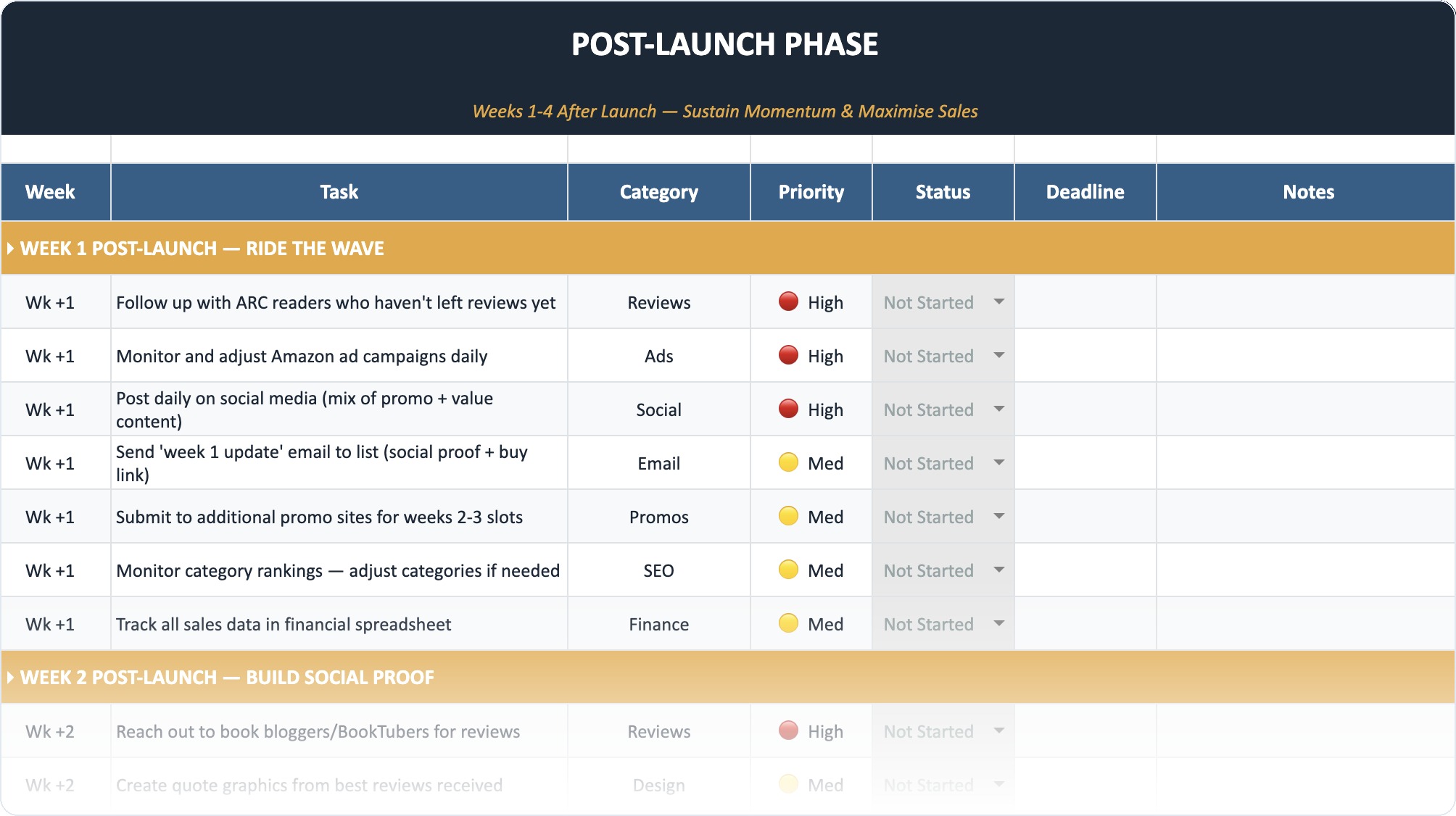
The Self-Publishing Launch Checklist (2026)
A week-by-week spreadsheet that walks you through every step of launching your book. Available as an Excel file and Google Sheet.
Final Thoughts: The Long Game
Finding author critique partners is not something you do once. It is a career-long process. My critique partners have changed over the years as my writing has changed. Some have quit writing. Some have become bestsellers and got too busy. That is okay.
The goal is not to find one person to hold your hand forever. The goal is to build a network of peers who challenge you to be better.
Put yourself out there. Write the awkward introduction post. Read someone else's messy Chapter 1. The community is waiting for you, but you have to knock on the door.
Frequently Asked Questions
What if I write in a very obscure genre?
If your genre is extremely niche (e.g., "Underwater Basket Weaving Erotica"), you might struggle to find a dedicated partner in that specific lane. In this case, look for partners in adjacent genres. A romance writer can still help you with character chemistry, and a thriller writer can help with pacing, even if the subject matter is different. Focus on the mechanics of storytelling rather than the specific tropes.
How do I protect my work from being stolen?
This is a common fear, but actual manuscript theft is rare. Most writers are too busy struggling with their own ideas to steal yours. However, for peace of mind, only swap with people who have a digital footprint (active profiles on Scribophile, critique history, etc.). You can also keep a paper trail of your emails. Remember, you automatically own the copyright the moment you write the words.
Can I have more than one critique partner?
Yes, and you should. I recommend having 2-3 partners if you can manage the time commitment. One might be great at grammar and line editing, while another is a genius at plot structure. Getting varied perspectives helps you triangulate the truth. If one person hates a scene, it might be taste. If three people hate it, it is a problem.
What should I do if a partner is too harsh?
Feedback should be constructive, not destructive. If a partner makes personal attacks or leaves comments that feel mean-spirited rather than helpful, you have the right to end the partnership. Send a polite message: "I don't think our styles are a good fit, so I'm going to pause our swaps. Thanks for your time." You do not owe anyone your mental health.
Is it better to swap weekly or finish the whole book first?
This depends on your personality. Some writers (pantsers) need to finish the whole draft before showing it to anyone, or they risk losing momentum. Others (plotters) prefer weekly swaps to catch issues early before they ripple through the whole book. Discuss this upfront with your potential partner to ensure your schedules align.
Do I need a critique partner if I plan to self-publish?
Absolutely. In fact, you need them more. Traditional publishing has gatekeepers (agents, editors) who act as quality control. In self-publishing, you are the gatekeeper. If you skip the peer review phase, you are likely publishing a first draft, which will result in bad reviews. Critique partners are your first line of defense against 1-star reviews.