

That 150,000-word masterpiece you just finished? It's probably unsellable. That's a harsh truth, but in traditional publishing, manuscript length is one of the first hurdles your book has to clear. Before an agent even reads your first page, they look at the word count. If it's way off, it's an instant rejection. This genre word count guide will break down exactly what agents and publishers are looking for in 2026, so you don't get rejected for a simple, fixable reason.
- The Sweet Spot: Most adult commercial and literary novels should be between 70,000 and 100,000 words. The industry average hovers around 90,000 words.
- Genre is King: Word count expectations change drastically by genre. A 110,000-word fantasy novel is normal; a 110,000-word romance is a major red flag.
- Debut Authors Beware: Established authors get more leeway. If this is your first book, sticking to these guidelines isn't optional. It’s essential.
- Self-Publishing is Different (Sort Of): While you have more freedom, reader expectations still dictate what sells. Ignoring them hurts your reviews and sales.
The Ultimate Genre Word Count Guide
Knowing the expected book length for your genre is as important as having a good plot. Publishers and agents use word count as a quick filter. It tells them if you understand your market, if you can edit yourself, and whether your book will be profitable to produce. With rising paper and printing costs, a manuscript that's too long is a huge financial risk.
Think of it like this: readers have expectations. When they pick up a cozy mystery, they expect a quick, satisfying read, not a sprawling epic. When they buy a fantasy novel, they expect a deep world to sink into. Meeting these expectations is the first step toward a successful book.
Below is a detailed breakdown of the typical word count by genre. These are the numbers that will get your manuscript past the first gatekeepers.
Novel Word Count by Genre: The Definitive Table
| Genre | Typical Word Count Range | Notes for Authors (2026) |
|---|---|---|
| Literary Fiction | 70,000 – 100,000 | New authors should aim for the 70k-90k range. Focus on tight prose and character depth. |
| Thriller & Mystery | 70,000 – 90,000 | Pacing is everything. If the book's too long, you kill the tension. Cozy mysteries are often shorter (70k-75k). |
| Romance | 50,000 – 90,000 | Subgenre dictates length. Category romances are shorter (50k-60k), while mainstream romance hits 70k-90k. |
| Fantasy | 90,000 – 120,000 | World-building takes space, but new authors should be cautious about going over 110,000 words. |
| Science Fiction | 90,000 – 120,000 | Similar to fantasy. Hard sci-fi might need more words for technical world-building. |
| Horror | 70,000 – 100,000 | You need to maintain a sense of dread. A bloated word count gives the reader too much room to breathe. Aim for 70k-90k. |
| Young Adult (YA) | 50,000 – 80,000 | YA fantasy can push the upper limit, but contemporary YA should stay lean to hold a teen reader's attention. |
| Middle Grade (MG) | 20,000 – 55,000 | Your target audience has a shorter attention span. Fantasy and adventure can be longer, up to 60,000. |
| Memoir | 70,000 – 100,000 | Standard memoirs should stick to the 70k-90k range. Tell a focused story, not your entire life. |
| Self-Help | 40,000 – 70,000 | Get to the point. Readers want actionable advice, not endless theory. Shorter is often better here. |
Stop Staring at a Blank Page
Publy is a distraction-free book editor with AI built in. Brainstorm plot ideas, get instant chapter reviews, or rewrite clunky paragraphs. 3 million free words included.

Why Does Word Count Matter So Much?
Some writers get defensive about word count. "My story needs 150,000 words to be told!" they say. Maybe. But an agent will probably never read it to find out. Here’s the brutal reality of why this single number is so important.
1. Production Costs and Profitability
Books are physical products. A longer book requires more paper, more ink, more glue, and more warehouse space. It costs more to print and more to ship. A report on publishing trends shows these rising costs make publishers extremely cautious. For a publisher, a debut author's 150,000-word novel is a massive financial gamble. They have to set a higher retail price to make a profit, which can scare away buyers. For a new author with no track record, that’s a risk they are almost never willing to take.
2. Reader Expectations
Readers are creatures of habit. They've been trained by decades of publishing to expect a certain experience from each genre. When someone buys a thriller, they expect a fast-paced story they can finish in a few sittings. Handing them a 500-page tome breaks that promise. Conversely, an epic fantasy fan might feel cheated by a slim 60,000-word book that doesn't allow for rich world-building. These genre conventions are powerful market forces you can't ignore.
3. The Agent's Filter
Literary agents are flooded with thousands of submissions. They need quick and easy ways to filter the slush pile. Frankly, word count is the first and easiest filter.
- Too Long (>120k for most genres): This screams amateur. It suggests the author doesn't know the market and, more importantly, can't self-edit. The agent assumes the book is full of fluff, rambling subplots, and pacing problems.
- Too Short (<60k for most adult novels): This suggests the story is underdeveloped. The agent assumes the characters are thin, the plot is weak, or it's really a novella trying to pass as a novel.
Sticking to the guidelines shows you’re a professional who has done their homework. This alone puts you ahead of a huge chunk of the competition. If you want to learn how to write a query letter for your novel, know that your word count is one of the first three things an agent reads, right alongside your title and genre.
Traditional Publishing vs. Self-Publishing Word Counts
The path you choose for publishing directly affects how strictly you need to follow these rules.
The Rules of Traditional Publishing
In the traditional world, word count is a hard-and-fast rule, especially for debut authors. You're asking a company to invest thousands of dollars in your book. They need to minimize risk. Adhering to the standard manuscript length for your genre shows you respect their business model.
Established authors like Stephen King or George R.R. Martin can get away with massive books because they have a proven sales record. A publisher knows they'll make their money back. As a new author, you don't have that luxury. Your job is to make it as easy as possible for an agent and editor to say "yes." Submitting a manuscript with a professional word count is a huge part of that. Reading up on the potential pitfalls of publishing deals is also smart; some authors get caught in bad situations detailed in warnings about red flags in publishing contracts.
The Freedom of Self-Publishing
If you choose to self-publish, you're the boss. You can publish a 20,000-word novella or a 200,000-word epic. No agent will reject you. However, this freedom doesn't mean you should ignore the rules entirely. Your readers are still the same people who buy traditionally published books. They have the same expectations.
- Reviews Matter: If your romance novel is only 30,000 words, readers might leave 1-star reviews saying it felt rushed or not worth the price.
- Pricing is Tricky: It's hard to justify charging $4.99 for an ebook that's only 40,000 words long when other novels in the genre are 80,000 words for the same price.
- Read-Through is Key: Many indie authors thrive on writing series. If your books are satisfyingly long, readers are more likely to buy the next one.
The savvy self-publisher understands genre conventions and uses them to their advantage. They might write shorter books but release them more frequently, or price their novellas lower to attract new readers to a series. They still respect the reader's time and expectations. For anyone just starting out, our guide on self-publishing on Amazon for under $200 can be a huge help.
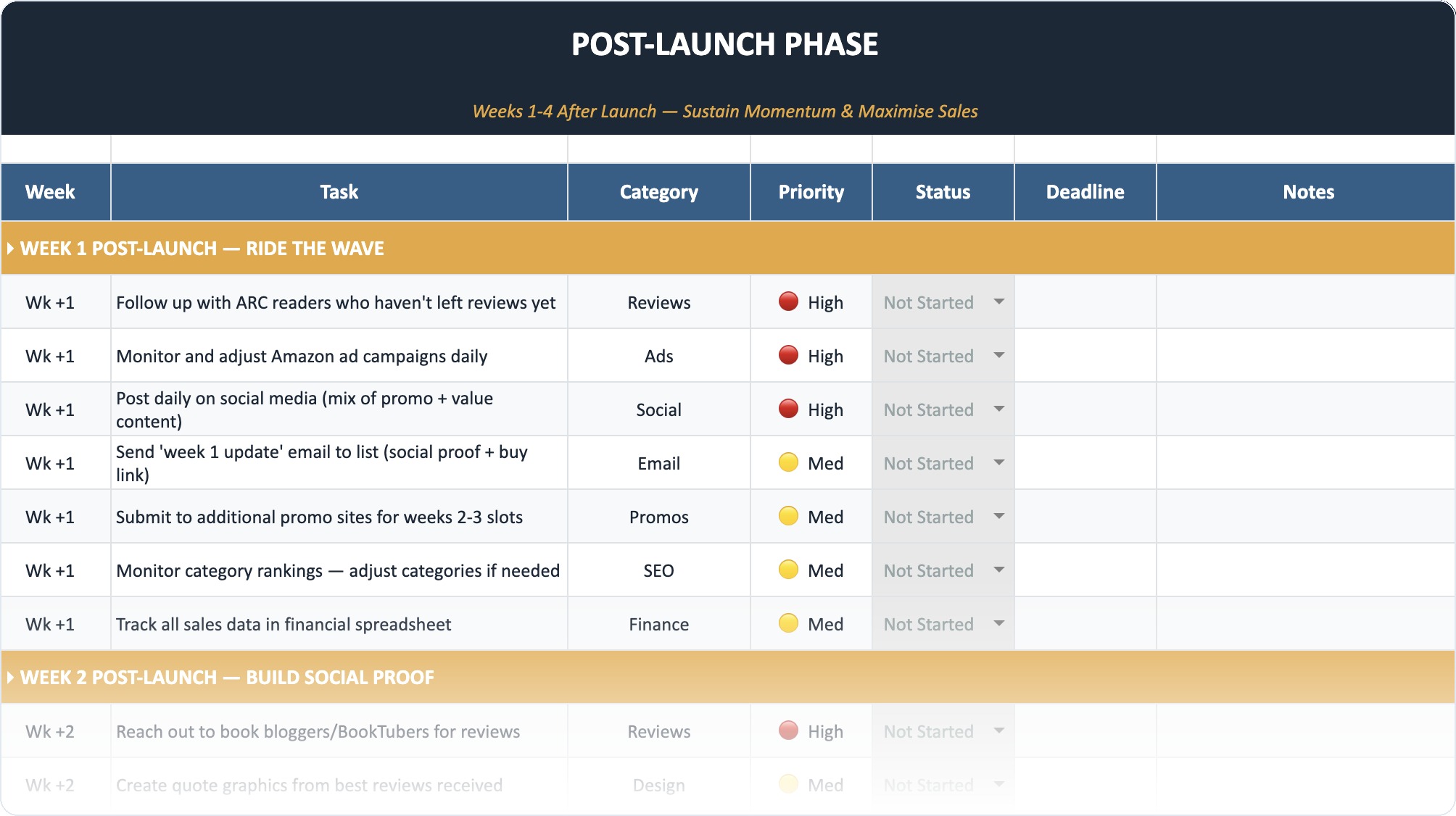
The Self-Publishing Launch Checklist (2026)
A week-by-week spreadsheet that walks you through every step of launching your book. Available as an Excel file and Google Sheet.
Your Manuscript is Too Long: How to Cut Without Crying
You finished your book and it's a whopping 140,000 words. Don't panic. Almost every first draft is too long. A professional writer's skill is found as much in rewriting and cutting as it is in writing the first draft. Here’s how to trim the fat.
Use your word processor's Find function to search for weak words. Look for adverbs (-ly), filter words (felt, saw, heard, thought), and filler words (just, really, very, that). Eliminating them will instantly tighten your prose.
1. Kill Your Darlings (Brutally)
This is classic advice for a reason. That beautiful paragraph describing a sunset? Does it move the plot forward? Does it reveal character? If not, it has to go. That witty side character who has some great one-liners but doesn't affect the main story? Axe them. It hurts, but your story will be stronger for it.
2. Hunt Down Redundant Scenes
Do you have two different scenes that accomplish the same goal? For example, a scene where characters argue about a plan, and then another scene where they explain that same plan to someone else. Pick the more dynamic one and cut the other. Combine characters or events where possible to make the narrative more efficient. Many writers find this helps with fixing a sagging middle in their manuscript.
3. Tighten Every Single Sentence
This is where the real work happens. Go through your manuscript line by line.
- Cut passive voice: Change "The ball was thrown by him" to "He threw the ball."
- Remove throat-clearing: Phrases like "He began to think," "She started to walk," or "It's important to note that" are almost always useless. Just have the character think or walk.
- Show, Don't Just Tell (Efficiently): While "show, don't tell" is good advice, sometimes telling is more efficient. Instead of a long paragraph showing a character's morning routine to establish they are neat, just write "He was a man who alphabetized his spice rack." This is where a good emotion thesaurus can help you find powerful, concise ways to show feeling.
4. Read It Aloud
Reading your manuscript out loud is a magical editing trick. You'll hear the clunky sentences, the repetitive phrases, and the dialogue that doesn't sound natural. If you stumble over a sentence when you say it, it needs to be rewritten or cut.
Your Manuscript is Too Short: How to Add Words That Matter
Your story is finished, but it’s only 55,000 words. You need to add content, but you don't want to just pad it with useless fluff. Your goal is to add depth, not just words.
1. Deepen Your Characters' Internal Worlds
A short manuscript often lives on the surface. Go deeper.
- Motivation: Do we truly understand why your protagonist wants what they want? Add a scene or a flashback that shows us the origin of their desire.
- Internal Conflict: What are their doubts and fears? Show us the internal monologue as they wrestle with a tough decision. Let the reader see their vulnerabilities.
- Reactions: Don't just have an event happen. Show us how your main character reacts to it, both externally and internally. Let them process the event and what it means for them.
2. Introduce a Subplot
A well-placed subplot can add thousands of words and enrich your main story. It should connect to the main plot thematically or through character relationships. Maybe your detective investigating a murder has to deal with a personal family crisis at the same time. This adds layers and gives you more material to work with. For writers just getting started, learning how to write a book with no experience often involves mastering the art of weaving subplots.
3. Raise the Stakes
Make things harder for your characters. Add a new obstacle, a "ticking clock" element, or a complication that makes their goal even more difficult to achieve. When the protagonist tries to solve a problem, make their solution fail or create a brand new, worse problem. This forces you to write new scenes showing them overcoming these fresh challenges.
4. Flesh Out Your World
Give your setting more life. This doesn't mean adding long, boring descriptions. It means interacting with the world.
- Sensory Details: What does the city smell like? What is the texture of the alien plant? What sounds does the old house make at night?
- Minor Characters: Give a minor character a short scene or a memorable quirk that makes the world feel more populated and real.
- Show the Consequences: If there's a war going on, show us a scene with refugees or a supply shortage. Make the world feel lived-in and affected by the story's events.
Writing can feel isolating, but remember there are tons of free tools for self-published authors that can help with everything from outlining to editing, which can be useful when you need to expand or cut your manuscript.
Frequently Asked Questions
How strict are agents about word count guidelines?
For debut authors, they're very strict. An agent might have a personal range they prefer, but if your manuscript is 20,000 words outside the standard for its genre, it's an easy rejection. It signals you haven't done your research. Established, bestselling authors have much more flexibility.
Can a debut author write a 120,000-word novel?
They can, but it's a very hard sell unless it's in a genre that supports it, like epic fantasy or science fiction. For a debut literary novel, thriller, or romance, 120,000 words is almost certainly too long and will likely be rejected on word count alone. Your writing would have to be absolutely breathtaking from page one to overcome that bias.
What is the difference between a novella, a novelette, and a novel?
The lines can be blurry, but general definitions are based on word count:
- Novel: 40,000 words or more (though most published novels are 70k+).
- Novella: 17,500 to 39,999 words.
- Novelette: 7,500 to 17,499 words.
- Short Story: Under 7,500 words.
How do I calculate my manuscript's word count properly?
All major writing software (Microsoft Word, Scrivener, Google Docs) has a built-in word count tool. Use it. Don't estimate based on page count, as that can vary wildly with formatting. The total word count of the manuscript file is the number agents and publishers want to see.
Does the word count include the title page and table of contents?
No. The official word count is just the main body of your story, from the first word of chapter one to the last word of your epilogue. Don't include acknowledgments, author bios, or anything else.
If I'm writing a series, should each book meet the word count guidelines?
Yes. Each book in a series should feel like a complete, satisfying story that fits within the genre's word count expectations. While the overall series can be massive, each individual installment needs to stand on its own and deliver the experience readers expect from that genre.
META_DESCRIPTION: Novel word count too high or low? Fix your manuscript length to meet publisher expectations. Get the exact word counts by genre for 2026.