

You have spent months, perhaps years, writing your manuscript. The plot is tight. The characters breathe. The cover art is stunning. Now you are at the final hurdle of the upload process on Amazon KDP or IngramSpark, and you face a seemingly small question that actually carries massive weight: Cream or White paper?
It sounds like a minor detail. Who cares about the shade of the page? Your readers do. In fact, choosing the wrong paper type can immediately signal to a reader that your book is "self-published" in the worst way possible. It affects readability, genre expectations, and even the physical thickness of your book spine.
If you are publishing a novel, the short answer is almost always cream. But you need to understand why so you can make the best decision for your specific project. In this guide, I will break down the cream vs white paper for novels debate, looking at readability science, industry standards, and the subtle psychological cues that tell a reader they are holding a professional quality book.
- Fiction Standard: Cream paper is the industry standard for novels, memoirs, and narrative non-fiction because it reduces eye strain.
- Non-Fiction Standard: White paper is preferred for textbooks, technical manuals, and cookbooks where contrast and image clarity are necessary.
- Spine Width: Cream paper is often thicker than white paper of the same weight, which can make your book feel more substantial and affect your cover design.
- Perception: Using bright white paper for a fantasy or romance novel often signals “amateur” to readers and can lead to negative reviews about readability.
The Industry Standard: Why Fiction Authors Choose Cream
When you walk into a bookstore and pick up a paperback novel from a major publishing house, take a close look at the pages. Chances are high that the paper is not stark white. It is likely a soft, pale yellow or off-white color. This is cream paper.
For fiction, cream is the undisputed king. It is not just about tradition. It is about the reading experience. Fiction is immersive. You want the reader to get lost in the story for hours at a time. Stark white paper reflects a significant amount of light, which can tire the eyes over long periods. Cream paper absorbs more light, creating a softer contrast between the text and the page.
The "Amateur" Signal
One of the biggest fears for indie authors is having their book look "home-made." There are several tell-tale signs of an amateur production, such as bad kerning, widowed lines, or low-resolution covers. However, paper choice is a surprisingly common mistake.
If a reader orders a Grimdark fantasy novel or a cozy mystery, they expect a certain tactile experience. If they open the book and are hit with the blinding brightness of standard copier paper, it feels wrong. It feels like a textbook or a printed PDF. This disconnect pulls the reader out of the story before they have even read the first sentence.
Genre Expectations Breakdown
I have analyzed thousands of books across various genres. Here is the general breakdown of what readers expect based on the category:
- Fiction (Romance, Thriller, Sci-Fi, Fantasy): Cream.
- Narrative Non-Fiction (Biographies, Memoirs, History): Cream.
- Textbooks & Manuals: White.
- Self-Help (Action-oriented): White or Cream (depends on length).
- Children's Picture Books: White (for color popping).
- Cookbooks: White (usually coated).
If you are writing a novel, you are safe 99% of the time choosing cream.
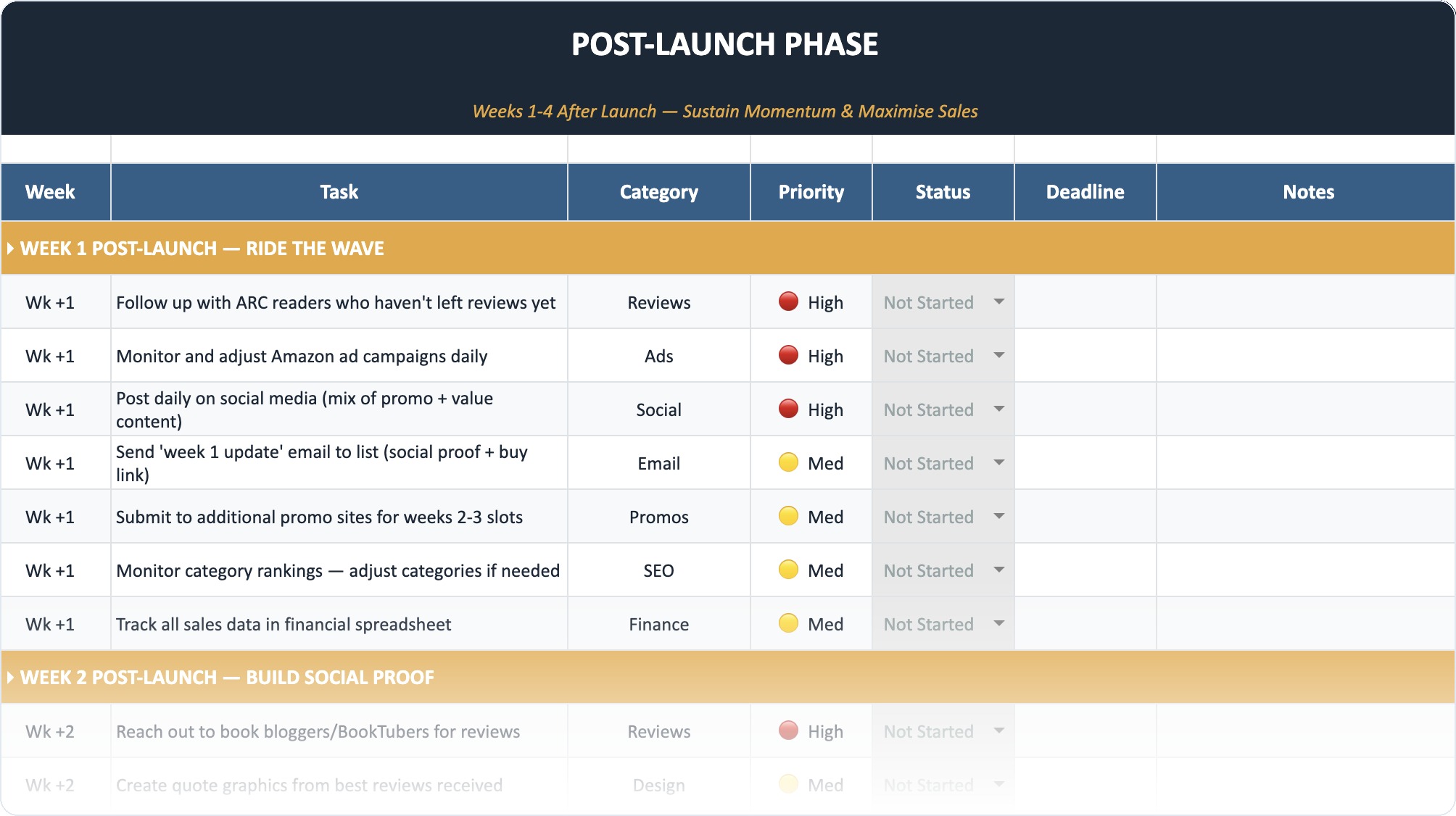
The Self-Publishing Launch Checklist (2026)
A week-by-week spreadsheet that walks you through every step of launching your book. Available as an Excel file and Google Sheet.
The Science of Readability: Contrast and Eye Strain
The debate between cream vs white paper for novels is not purely aesthetic. It is biological. Reading is a visually intensive task. Your eyes are constantly focusing and refocusing, tracking lines, and decoding symbols.
High Contrast vs. Soft Contrast
White paper provides the highest possible contrast with black ink. In theory, high contrast is good for legibility. This is why road signs are often black on white or yellow. You need to see them instantly and clearly.
However, a novel is not a road sign. You do not glance at it; you stare at it.
When the background is bright white, it reflects a full spectrum of light back into the retina. Under bright reading lights or direct sunlight, this glare can cause "dazzle," leading to faster eye fatigue. This is sometimes referred to as "snow blindness" on a micro scale.
Cream paper has a lower reflectance value. It subtly mutes the contrast. The black text still stands out clearly, but the background does not compete for attention. This reduction in blue light reflection makes the page feel "warmer" and more inviting.
Reader Preference Data
Data supports this. Most avid readers prefer the softer tone of cream paper for extended sessions. According to a Google Vertex AI research summary, cream paper helps reduce glare and eye strain, making it the preferred option for people reading for long durations. This is particularly relevant for neurodiverse readers or those with dyslexia, where high contrast can sometimes cause visual distortion or "floating text."
When to Use White Paper
I am not saying white paper is bad. It has a specific purpose. There are scenarios where white paper is the superior choice, even for self-publishers.
1. Non-Fiction and Textbooks
If you are writing a book that is meant to be studied rather than devoured, white paper is appropriate. Textbooks, coding manuals, and reference guides benefit from the crisp, clean look of white paper. It signals clarity, precision, and modernity.
2. Books with Images and Graphs
This is the most practical reason to choose white. Cream paper alters the color of images. If you print a color photo on cream paper, the yellows in the paper will mix with the ink, muddying the colors and reducing the dynamic range. Even black and white charts look sharper on white paper.
If your novel includes maps, they usually look fine on cream paper (it adds to the "antique" vibe). But if your book relies on diagrams, screenshots, or photos, white paper will preserve the integrity of those visuals.
3. Low-Content Books
Journals, planners, and workbooks are almost always printed on white paper. Users expect to write in these books, and white paper generally handles pencil and ballpoint pen marks in a way that feels more standard for writing surfaces.
Stop Staring at a Blank Page
Publy is a distraction-free book editor with AI built in. Brainstorm plot ideas, get instant chapter reviews, or rewrite clunky paragraphs. 3 million free words included.

Technical Specifications: KDP and IngramSpark
When you upload your book to Amazon KDP or IngramSpark, you are not just picking a color. You are picking a paper weight and type. This affects your printing costs and your spine width.
Paper Weight Differences
Standard copier paper is usually 20lb bond (75 GSM). The paper used in books is different.
- Amazon KDP White Paper: Typically 55# (90 GSM). It is fairly thick and opaque.
- Amazon KDP Cream Paper: Typically 55# (90 GSM).
- IngramSpark Cream: Offers a standard 50# (74 GSM) and a heavier option.
Wait, did you catch that?
IngramSpark's standard cream paper is 50#, while KDP's is 55#. This means KDP cream pages are slightly thicker and heavier than the standard trade paperback paper you might find in a bookstore (which is often even lighter, around 50# or even 45# for mass market paperbacks).
The "Fluff" Factor and Spine Width
This is a detail many authors miss until it is too late. Different papers have different "PPI" (Pages Per Inch) measurements. Even if the weight is the same, the caliper (thickness) of the sheet can vary based on how much air is left in the paper fibers during manufacturing.
Cream paper is often "high bulk" or "bulky." It is fluffier.
If you have a short novel (e.g., 40,000 words), choosing cream paper can help bulk up the spine. A 150-page book on cream paper might look like a respectable paperback. The same 150 pages on crisp white paper might look dangerously thin, almost like a pamphlet.
Conversely, if you have a massive epic fantasy with 800 pages, cream paper might make the book unmanageable or push it past the maximum spine width allowed by the printer.
Pro Tip: Always download the specific cover template for the paper type you choose. You cannot switch from white to cream after designing your cover without adjusting the spine width.
If you are struggling with setting up your file correctly, you might want to look into what is the best software for book layout formatting software to ensure your page counts align perfectly with your paper choice.
Cost Implications: Is Cream More Expensive?
For a long time, there was a rumor that cream paper cost significantly more than white paper. In the world of offset printing (where you print 1,000 copies at once), paper choice drastically affects the quote.
However, in the world of Print-On-Demand (POD), the price difference is usually negligible or non-existent.
Amazon KDP Pricing
On Amazon KDP, the printing cost is calculated based on page count and ink type (black vs. color). Whether you choose "Black Ink and Cream Paper" or "Black Ink and White Paper," the cost per book is generally the same.
IngramSpark Pricing
IngramSpark sometimes has slight variations depending on the specific market and printer current rates, but generally, the standard 50# cream and 50# white are comparable in price.
This effectively removes budget as a deciding factor. You are free to choose based on aesthetics and market fit rather than your wallet.
For a deeper understanding of the costs involved in getting your book out there, check out self publishing on amazon for under 200 the definitive guide.
Durability and Archival Quality
If you are hoping your novel will sit on a library shelf for decades, you need to think about paper chemistry.
Cheap mass-market paperbacks (the small ones sold in airports) are often printed on "groundwood" paper. This paper has high acid content. That is why old paperbacks turn yellow and brittle over time.
The cream and white paper used by KDP and IngramSpark is typically "acid-free." This means it is archival quality. It will not yellow significantly or crumble in ten years.
- Cream Paper Longevity: Because cream paper already has a tint, any slight aging is less noticeable than on bright white paper.
- Opacity: Opacity refers to how much text shows through from the other side of the page. 55# cream paper generally offers excellent opacity. You rarely see the ghost of the text from the reverse side, which keeps the reading experience clean.
The Psychological Impact of Color Temperature
Color psychology plays a subtle role in how a reader perceives your story.
- White (Cool Temperature): sterile, modern, factual, harsh, precise, open.
- Cream (Warm Temperature): nostalgic, classic, intimate, fictional, cozy, dense.
When a reader settles in with a cup of tea to read a historical romance, the warm tone of cream paper mirrors the "cozy" atmosphere. It feels organic.
When a reader picks up a sci-fi thriller set in a high-tech future, you could make an argument for white paper to reflect the sterile environment, but even then, the convention of "fiction = cream" is so strong that breaking it usually does more harm than good.
The "Self-Published" Look
I cannot stress this enough: The stigma of self-publishing is fading, but it still exists. Readers are becoming savvy. They can spot a DIY job.
One of the fastest ways they identify a "cheap" book is the paper. Why? Because most people associate bright white paper with their home printer. If your book looks like a stack of Word documents bound together, the reader unconsciously lowers their expectation of the writing quality.
By choosing cream, you are borrowing the authority of traditional publishing. You are saying, "This is a real book, produced to the same standards as the bestsellers on the shelf next to it."
To ensure your entire interior lives up to that standard, you might want to read about how to create an interior layout that looks professional.
Comparison Table: Cream vs. White vs. Groundwood
To make this easier to digest, here is a comparison of the common paper types available to authors.
| Feature | Cream Paper | White Paper | Groundwood (Mass Market) |
|---|---|---|---|
| Best For | Novels, Memoirs, Poetry | Textbooks, Non-Fiction, Images | Cheap Paperbacks |
| Visual Feel | Warm, Traditional, Classic | Bright, Modern, Crisp | Rough, Grayish, gritty |
| Eye Strain | Low (Good for long reading) | High (Can cause glare) | Low (Low contrast) |
| Image Quality | Fair (Colors may muddy) | Excellent (Sharp contrast) | Poor |
| Availability | Standard on KDP/Ingram | Standard on KDP/Ingram | Specific printers only |
| Perception | "Professional Fiction" | "Non-Fiction / DIY" | "Cheap / Disposable" |
Sustainable Paper Choices
The publishing industry is moving toward sustainability. Readers care about where paper comes from. According to market analysis on printing trends, there is a growing demand for FSC-certified and recycled papers.
Both KDP and IngramSpark source their paper from responsible suppliers, but the specifications can change based on the region where the book is printed. Generally, the cream paper used in POD is uncoated and recyclable.
If sustainability is a core part of your author brand, you can mention in your book's back matter that the book was printed on demand, which reduces waste by eliminating the need to pulp unsold copies. This connects well with the decision to use what is print on demand and how does it work for authors.
Exceptions to the Rule: When Fiction Works on White
Are there ever times when a novel should be on white paper? Yes, but they are rare.
1. Illustrated Novels / Light Novels
If you are writing a Japanese-style light novel or a book that includes manga-style illustrations every few chapters, white paper is often preferred. The black ink of the illustrations needs to pop, and the clean white background preserves the artist's line work better than cream.
2. Modernist / Experimental Fiction
Some experimental literature plays with the visual space of the page. If your book uses negative space, unique typography, or visual poetry that relies on stark contrast, white paper might be part of your artistic statement.
3. Large Print Editions
While cream is generally better for eyes, some large print editions for the visually impaired utilize high-contrast white paper with very bold black text to maximize legibility for those with specific vision issues like cataracts, where contrast sensitivity is lost.
How to Check Before You Commit
You do not have to guess. Before you approve your book for distribution, you should always order a proof copy.
Never, ever publish a book without holding a physical copy in your hands first.
When you order a proof from Amazon KDP or IngramSpark:
- Check the tint: Compare it to other books on your shelf.
- Check the thickness: Does the spine feel substantial?
- Check the opacity: Hold a page up to a reading light. Can you read the text from the back side? If it is too distracting, you might need to adjust your font weight or choose a different paper option if available (though KDP is limited).
- Check the glare: Sit under a lamp and read for 20 minutes. Do your eyes hurt?
According to KDP print options documentation, the standard specifications for paper weight are consistent, but seeing it in person is the only way to verify the tactile quality.
Conclusion: Make the Professional Choice
The decision between cream vs white paper for novels might seem trivial compared to writing the book, but it is a critical piece of the packaging. Packaging sells books.
If you are writing fiction, choose cream. It signals to the reader that you understand the genre. It provides a comfortable, immersive reading experience. It prevents your book from looking like a cheap office printout.
If you are writing non-fiction, technical manuals, or highly illustrated books, choose white.
Your goal is to remove friction. You want the reader to slide into your story without noticing the physical object they are holding. Cream paper is the invisible medium that lets your words shine.
Frequently Asked Questions
Is cream paper more expensive than white paper on KDP?
No. For black and white interiors, Amazon KDP charges the same printing cost regardless of whether you choose cream or white paper.
Can I change my paper type after publishing?
On Amazon KDP, you cannot change the paper type (e.g., from white to cream) for an existing ISBN. You would need to unpublish the current version and republish it as a new title with a new ISBN because the paper change affects the spine width.
Which paper is better for scanning or copying?
White paper is better for scanning and copying because it provides higher contrast. However, this is rarely a concern for novels.
Does cream paper look yellow?
It depends on the lighting. In daylight, it looks like a soft off-white or ivory. Under warm incandescent bulbs, it can look more yellow. It is designed to mimic the natural look of traditional book paper.
What is the weight of KDP cream paper?
Amazon KDP uses 55# (90 GSM) paper for both cream and white options in standard color and black & white books. This is slightly heavier than standard trade paperback paper, giving it a quality feel.