

Here is the refined content, polished to meet human-written standards while maintaining depth and formatting.
- Social media is rented land. An email list is the only asset you truly own. It protects you from sudden algorithm changes and platform shutdowns.
- The ROI is massive. For every $1 spent on email marketing, authors see an average return of $36 to $42.
- You need three things. A reader magnet (freebie), a landing page, and an email service provider (ESP) are your starter kit.
- Quality over quantity. A list of 500 engaged superfans is worth more than 10,000 passive subscribers who never open your emails.
Trying to sell books on social media often feels like shouting into a hurricane. You post, you tweet, and you make videos, but the algorithm buries your hard work unless you pay for ads. That is why building an author email list is the single most profitable move you can make for your writing career.
If Facebook or TikTok disappeared tomorrow, most authors would lose their entire fanbase instantly. But if you have an email list, you still have a direct line to your readers. You own that data. No algorithm can take it away from you.
This guide isn't about vague "community building" advice. It is a technical, step-by-step breakdown of how to go from zero subscribers to a profitable list that actually sells books.
Why an Author Email List Beats Social Media Every Time
Most authors resist starting a newsletter because it feels like just another chore on an endless to-do list. However, the math proves it is the only thing you should prioritize if you want to sell books long-term.
Social media engagement is in freefall. Organic reach on platforms like Facebook often dips below 2%. Meanwhile, email marketing consistently delivers. According to recent marketing data benchmarks, consumers prefer brands to contact them via email over any other channel by a margin of 51%.
The Return on Investment (ROI) is Massive
You might hesitate to pay for an email service, but the return covers the cost quickly. The average return on investment for email marketing sits between $36 and $42 for every single dollar spent.
Compare that to Facebook ads, where simply breaking even is often considered a win.
Authors Get Higher Open Rates
Readers actually want to hear from authors. While the corporate industry average for open rates hovers around 34%, data shows that authors in 2025 are seeing open rates as high as 43.14%. Your readers are curious about your process, your characters, and your next release.
The Core Components of Your List
You do not need a degree in computer science to set this up. You only need three specific components working together:
- The Container (ESP): The software that holds the email addresses and sends the messages.
- The Bait (Reader Magnet): The free item you give away in exchange for the email address.
- The Trap (Landing Page/Form): The webpage where readers type in their info.
Let’s break these down.
Choosing the Best Email Marketing Platforms for Authors
The first stumbling block is usually choosing the software. There are dozens of options, but only a few are truly built for the needs of authors. You need something that handles "automations" (sending emails automatically when someone signs up) and allows for "tagging" (labeling readers based on what links they clicked).
Here is how the top contenders stack up.
MailerLite (Best for Beginners)
MailerLite is widely considered the gold standard for fiction authors just starting out. It is affordable, the interface is clean, and the free tier is generous (usually up to 1,000 subscribers).
- Free tier includes automation
- Drag-and-drop builder is easy
- Excellent landing pages
- Approval process can be strict
- Interface changes frequently
ConvertKit / Kit (Best for Growth)
If you plan to sell courses or merchandise alongside your books, Kit (formerly ConvertKit) is a powerhouse. It focuses heavily on "deliverability," ensuring your emails don't land in the spam folder.
Substack (The "Writer" Option)
Substack is different. It is less of a marketing tool and more of a publishing platform. It is great if you want to write a blog that gets emailed to people, but it is terrible for advanced marketing funnels or selling backlist books automatically.
Start with MailerLite if you are on a budget. You can always export your subscribers and move to a different platform later if you outgrow it.
Stop Staring at a Blank Page
Publy is a distraction-free book editor with AI built in. Brainstorm plot ideas, get instant chapter reviews, or rewrite clunky paragraphs. 3 million free words included.

The "Reader Magnet": Why They Join
Nobody wakes up and thinks, "I want to join another newsletter today." You have to bribe them. In the publishing world, this bribe is called a Reader Magnet.
A reader magnet is a piece of digital content you give away for free when someone joins your author email list. It must be immediate, valuable, and directly relevant to your books.
Ideas for Reader Magnets
- The Prequel Short Story: Write a 5,000-word story about your protagonist's life before the main book starts. This creates high value because it gives extra lore to fans.
- The Deleted Scene: A chapter that got cut from the final edit but features a romantic moment or a cool fight scene.
- The Educational Checklist: If you write non-fiction, give them a "Cheat Sheet" related to your topic.
- The Full Novella: This is the nuclear option. Giving away a full novella guarantees high sign-ups.
For a deeper look at crafting these, check out our guide on best reader magnet ideas for 2026. If your magnet isn't appealing, your sign-up rate will stay at 0%.
Setting Up Your Tech Stack
Once you have your magnet (saved as a PDF or EPUB), you need to deliver it. Do not manually email the file to people. That is madness.
The Automation Sequence
- The Trigger: A reader enters their email on your form.
- The Email: Your ESP automatically sends an email titled "Here is your free book!"
- The Link: Inside that email is a link to download the file (BookFunnel or StoryOrigin are great services to host the file for you).
Landing Pages vs. Embedded Forms
An embedded form is a small box you put on your website footer. A landing page is a dedicated page with no navigation menu that exists solely to sell the freebie.
Use landing pages. Conversion rates for embedded forms are often low (around 1%), whereas dedicated landing pages can convert 3% to 10% of visitors.
How to Get Your First 1,000 Subscribers
You built the machine. Now you need fuel. Traffic does not appear by magic; you have to go get it.
1. The Back Matter Strategy
This is the most important real estate you own. The "Back Matter" is the section at the end of your book.
As soon as a reader finishes "The End," they are at peak dopamine. They love you. They want more. Right there, on the very next page, you must have a link that says: "Want a free prequel story featuring [Main Character]? Click here to grab it."
We discuss the mechanics of this in our article on book back matter calls to action. This generates the highest quality subscribers because you know they actually finished your book.
2. Newsletter Swaps
Find another author in your genre who has a similar list size. You agree to mention their book in your newsletter, and they mention yours in theirs. It is free, effective, and builds community.
3. Group Promos (BookSweeps / StoryOrigin)
There are services where 50 authors all pitch in $20 to run a giveaway. Readers enter to win a Kindle and must follow all the authors to enter.
Warning: This gets you subscribers fast, but they are often "freebie seekers" who might not buy books later. You will need to clean your list aggressively if you use this method.
4. Social Media Bio
Do not link to your Amazon book page in your Instagram bio. Link to your newsletter landing page. You want to capture the lead before you try to sell them something.
If you are struggling with the overall strategy of where to put these links, review these 12 tips to create a winning book marketing plan.
Writing Content That Doesn't Bore People
The biggest fear authors have is simply not knowing what to say.
You might assume readers only want to hear from you when you have a new book out. That is false. If you only email them once a year to say "Buy my book," they will forget who you are and unsubscribe.
The "90/10" Rule
90% of your emails should be valuable or entertaining. Only 10% should be hard sales pitches.
What to Send (When You Have Nothing to Sell)
- Book Reviews: Recommend books by other authors in your genre. Readers trust your taste.
- Character Art: Show them sketches or AI art of your characters.
- The "Struggle": Share a picture of your messy desk or talk about how hard Chapter 7 is to write. Humanize yourself.
- Research Rabbit Holes: Did you spend 4 hours researching medieval poisons? Tell them about it.
The best newsletter content is simply you being you. Readers connect with the person behind the book.
David Gaughran
Frequency Matters
Send an email at least once a month. If you go silent for 6 months, your open rates will tank when you finally return. Consistency keeps your "Sender Reputation" high with Gmail and Yahoo.
The Importance of List Hygiene
Having 10,000 subscribers sounds impressive, but if only 500 of them open your emails, you are wasting money. Most ESPs charge you based on the total number of subscribers.
You are effectively paying to send emails to ghosts.
Every 6 months, you should run a "re-engagement campaign." Ask people if they still want to be there. If they don't click a link, delete them. It sounds scary to delete 1,000 people, but your open rates will skyrocket, and your deliverability will improve.
Also, consider how your distribution impacts your list growth. If you are exclusive to Amazon, you miss out on readers on Kobo or Apple Books who might sign up. Read more about the KDP Select vs wide distribution debate to see how it affects audience capture.
Mobile Optimization is Non-Negotiable
We write our newsletters on desktops, but our readers read them on phones. Statistics show that 75-80% of email opens happen on mobile devices.
If you use massive images, tiny fonts, or complex multi-column layouts, your email will look like garbage on an iPhone. Keep it simple. Use large text (16px or higher) and single-column layouts. Test every email on your own phone before hitting send.
The Self-Publishing Launch Checklist (2026)
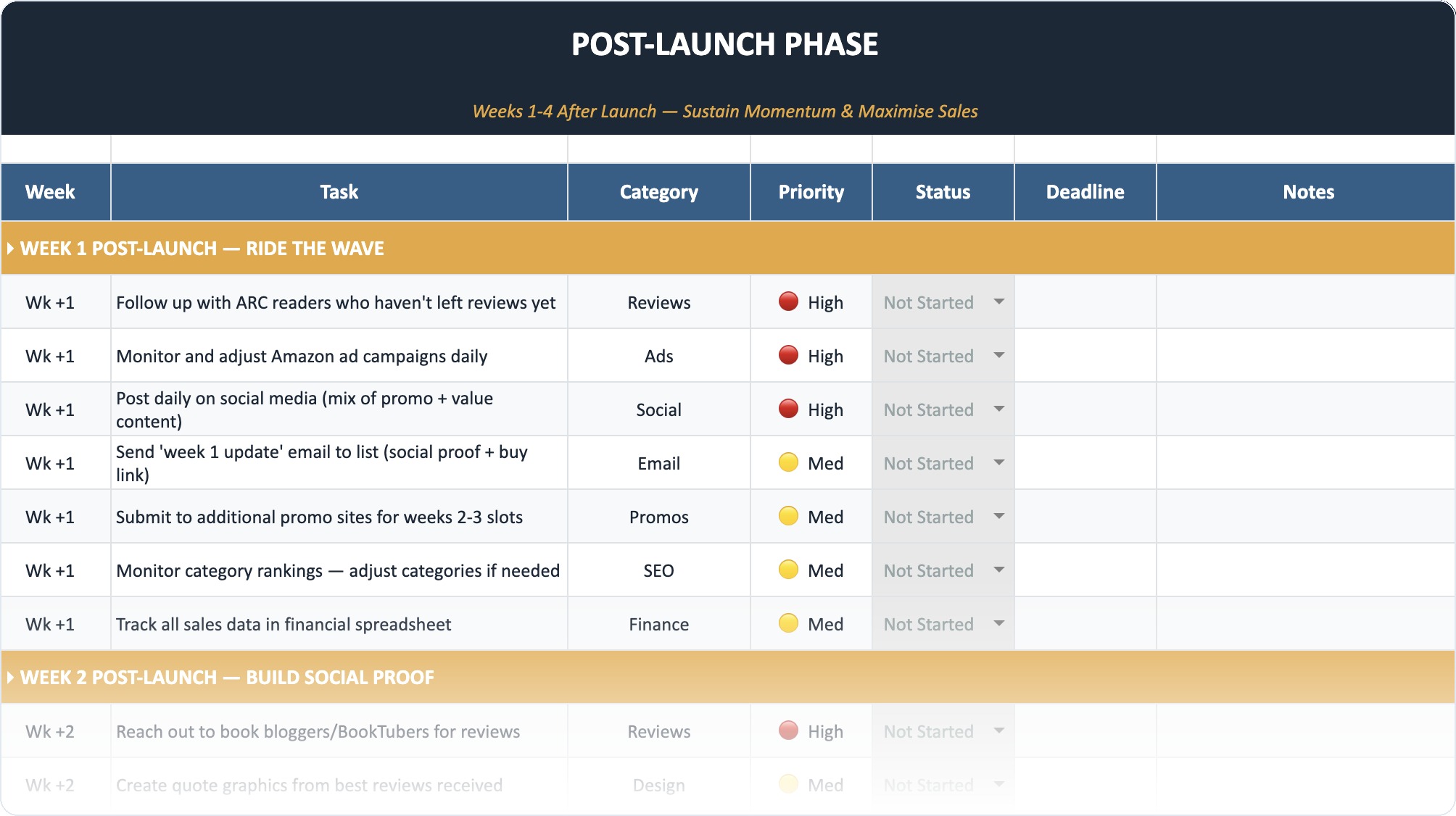
A week-by-week spreadsheet that walks you through every step of launching your book. Available as an Excel file and Google Sheet.
Advanced Tactics: Segmentation
Once you have a list, you shouldn't treat everyone the same.
- Superfans: People who click every link. Send them ARC (Advanced Reader Copy) offers.
- Freebie Seekers: People who downloaded the magnet but never bought a book. Put them in a discount funnel.
- Whales: People who reply to your emails. Talk to them personally.
Segmentation allows you to send the right message to the right person. You wouldn't try to sell Book 1 to someone who just finished Book 3.
Comparison: Tools to Build Your List
If you are looking for specific tools to help create your magnets or format your books for these magnets, here are some options.
"B09H1X2Y3Z"
Check Price on Amazon →As an Amazon Associate, we earn from qualifying purchases.
Building an author email list is not a sprint. It is a slow, steady grind that compounds over time. The first 100 subscribers are the hardest to get. But once you cross that threshold, you have a foundation. You have an audience that is waiting for your words.
Stop relying on the algorithm. Start building your asset today.
Frequently Asked Questions
How much does it cost to start an email list?
Most platforms like MailerLite or Kit offer free tiers for the first 1,000 subscribers. Your only initial cost might be the time spent creating a reader magnet. As your list grows, plans typically start around $9–$15 per month.
How often should I email my list?
Aim for consistency over frequency. Once or twice a month is the sweet spot for most fiction authors. If you email daily, you risk annoying readers. If you email quarterly, they will forget who you are.
What is a double opt-in?
Double opt-in means the subscriber must click a confirmation link in their email inbox before they are added to your list. While this might reduce your total sign-up numbers, it ensures a higher quality list and prevents spam bots from cluttering your data.
Can I just buy a list of email addresses?
Absolutely not. This is illegal under GDPR and CAN-SPAM laws. It will also get you banned from your email service provider immediately. You must earn your subscribers, not buy them.
What if people unsubscribe?
Celebrate it. An unsubscribe is not a rejection; it is the trash taking itself out. You want a list of people who love your work, not people who are indifferent. Unsubscribes improve your open rate percentages.
Do I need a website before I start a list?
Not necessarily. Many email providers allow you to build a standalone landing page hosted on their servers. You can share that link on social media or in your books without paying for a full domain and hosting package yet.