

You finished your manuscript. You edited it until your eyes blurred. You designed a cover that pops. Now you face the hardest part of the publishing business: getting strangers to care.
For decades, the "book tour" meant traveling from city to city, reading to empty chairs in independent bookstores, and eating bad airport food. That model died long before 2026. Today, the battle for attention happens on screens, not in physical shops. This is where virtual book tour companies enter the picture.
But with the rise of TikTok algorithms, AI-generated content, and shifting reader attention spans, are these paid services still worth your money? Or are they just a relic of the early 2010s blogosphere?
The answer is a hard "yes," but only if you understand that the definition of a "tour" has changed completely. It is no longer about just blogs. It is about digital dominance, hype building, and leveraging the right influencers at the exact right moment.
- Market Growth is Massive: The virtual events sector is projected to hit over $74 billion by 2030, proving digital engagement is here to stay.
- Higher Engagement: Authors report 70% better engagement with virtual events compared to physical bookstore stops.
- Video is King: The best tours now prioritize BookTok and Instagram Reels over text-based reviews.
- Hybrid is the Standard: Successful 2026 strategies mix virtual blasts with select physical events.
The State of Author Marketing in 2026
If you think the digital market is saturated, you are right. But that saturation is exactly why structured promotion is necessary. You cannot simply tweet a link and hope for the best.
The industry has shifted away from "organic discovery" toward "algorithmic brute force." Readers need to see a book cover five, six, or seven times before they click buy. Virtual book tour companies provide that repetition. They coordinate a massive influx of content—reviews, interviews, and visuals—so that for one week, your book feels like it is everywhere.
The Numbers Don't Lie
The shift to virtual is not just a feeling; it is backed by hard data. The global virtual tour market was valued at over $11 billion in 2024 and is on an upward trajectory. According to a 2030 market projection report, the industry is expected to reach $74.3 billion with a compound annual growth rate of 34.3%. This explosion in value proves that businesses and creators are doubling down on remote engagement.
For authors specifically, the return on attention is higher online. A physical event might net you 20 attendees if you are lucky. In contrast, an Authors Guild survey found that 70% of authors reported increased audience engagement through virtual events compared to traditional tours. You simply cannot ignore the efficiency of reaching readers where they already live: on their phones.
What Do Virtual Book Tour Companies Actually Do?
A common misconception is that a "tour" is just a series of book reviews. While reviews are part of it, modern companies offer a suite of promotional assets designed to create a "surround sound" effect for your launch.
1. The Cover Reveal
This is your first impression. A cover reveal campaign coordinates dozens of influencers to post your book cover on the same day, usually a few months before release.
- The Goal: Brand recognition.
- The Method: The tour company provides the image, hashtags, and caption to 50+ hosts.
- The Result: A potential reader scrolls Instagram and sees your cover ten times in ten minutes. This creates subconscious familiarity.
2. The Book Blitz
A book blitz differs from a tour. A tour spreads posts out over a week or month. A blitz happens all at once, usually on release day.
- Content: Excerpts, "Buy Now" links, and teasers.
- Strategy: It floods the market to spike the Amazon sales rank algorithm.
- Best For: Authors who already have specialized marketing services or a street team but need a wider net for launch day.
3. The Classic Blog Tour
This is the traditional model where different bloggers post content on specific days.
- Monday: Author Interview on Blog A.
- Tuesday: Guest Post on Blog B.
- Wednesday: 5-Star Review on Blog C.
- Why it still works: It creates SEO backlinks. When someone Googles your book title, these blog posts fill up the search results, pushing down any negative content or competitor ads.
4. The Hype Building Tour (TikTok & Instagram)
This is the 2026 standard. Companies now specialize in hiring "BookTokers" and "Bookstagrammers." These hosts do not write long blog posts. They make 15-second videos holding your book, using trending audio, or acting out a scene.
- Visual Impact: High.
- Viral Potential: Moderate to High.
- Cost: Often higher than blog-only tours due to the creator labor involved in video production.
Stop Staring at a Blank Page
Publy is a distraction-free book editor with AI built in. Brainstorm plot ideas, get instant chapter reviews, or rewrite clunky paragraphs. 3 million free words included.

The Economics: Costs vs. ROI
You need to treat your writing career like a business. That means understanding the price tag. Virtual book tours are significantly cheaper than physical travel, but they are not free.
Typical Pricing Structures
Most reputable companies operate on a tiered model.
- Basic Package ($100 – $300): Usually includes a simple book blitz or a 5-stop blog tour. You get graphics and scheduling, but rarely top-tier influencers.
- Standard Package ($400 – $700): Includes 10-15 stops, a mix of blogs and social media, and a cover reveal.
- Premium/Hybrid Package ($800 – $1250+): This includes video content creators, guaranteed minimum reach, podcast interviews, and aggressive hype building.
Comparing this to physical tours puts the value in perspective. Virtual book tours typically cost between $200 and $1,250 depending on the stops, which is a fraction of the cost of flights, hotels, and venue fees for a multi-city trip.
Calculating Return on Investment (ROI)
The hardest pill to swallow for many authors is that a book tour rarely pays for itself in immediate direct sales during the tour week.
- Direct Sales: You might sell 50 books during a $500 tour. The math looks bad immediately.
- Long-tail Sales: This is where the value lies. The reviews remain online forever. The backlinks boost your Google rank. The social proof convinces future readers to buy.
If you are looking for immediate, dollar-for-dollar profit, you might be better off looking at promotional newsletters like BookSends which focus purely on discount conversions. However, tours build the brand that makes those newsletters effective later.
How to Choose the Right Partner
Not all virtual book tour companies are created equal. The barrier to entry is low; anyone with an email list can call themselves a tour operator. You need to vet them carefully to avoid scams or low-effort services.
Vetting Checklist
- Genre Specialization: Do not hire a romance tour company for a sci-fi thriller. The audiences do not cross over. You need hosts who actually read your genre.
- Host Quality: Look at their past tours. Click the links. Do the blogs look like ghost towns? Do the Instagram posts have comments, or just bots? You want active engagement, not just high follower counts.
- Communication: A good company manages the hosts for you. If you have to chase down bloggers for their links, the company failed.
- Review Policy: Ensure they comply with Amazon’s Terms of Service. They cannot pay for reviews. They are paying for the organization of the tour. The reviewers must be free to post honest opinions.
Red Flags to Watch For
- Guaranteed 5-Star Reviews: This is unethical and likely against retailer terms. Legitimate reviewers act independently.
- Vague Reach Stats: "Reach of 1 million" usually means they summed up the follower counts of inactive accounts. Ask for average engagement rates.
- No recent activity: If their website hasn't been updated since 2024, they are likely out of business or neglecting their network.
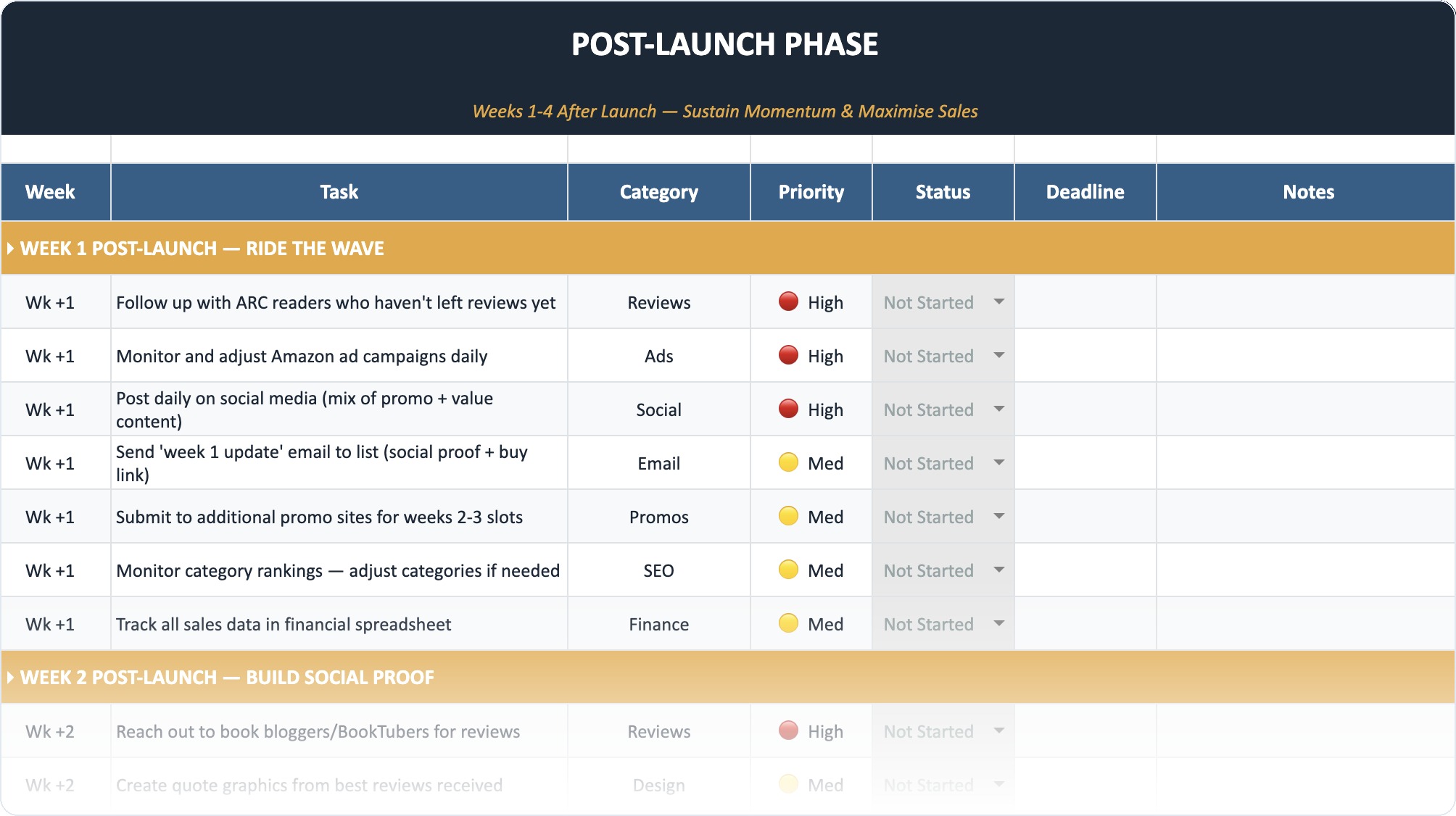
The Self-Publishing Launch Checklist (2026)
A week-by-week spreadsheet that walks you through every step of launching your book. Available as an Excel file and Google Sheet.
DIY vs. Hiring a Pro
Can you organize a tour yourself? Absolutely. Should you? That depends on your time and your tolerance for rejection.
| Feature | DIY Tour | Professional Company |
|---|---|---|
| Cost | Free (Time only) | $200 – $1200+ |
| Time Investment | 40+ Hours | 2-3 Hours |
| Network Access | Limited to your contacts | Immediate access to hundreds |
| Rejection Rate | High (Cold emailing) | Low (Pre-vetted hosts) |
| Graphics | You design them | Included professionally |
| Accountability | None | Contractual obligation |
If you are just starting, creating assets for your launch announcements and emailing bloggers yourself is a good way to learn the industry. However, once you have a budget, outsourcing this headache allows you to write the next book.
The Hybrid Model: The 2026 Trend
The most successful authors in 2026 are not choosing between physical and virtual. They are doing both. This is called the Hybrid Model.
You might do a physical launch party in your hometown and perhaps one major city nearby. Simultaneously, a virtual tour company runs a global campaign. This gives you the "local hero" content for your social media (photos of you signing real books) while the virtual tour captures the global sales.
Consumer behavior supports this split approach. A study by Bibliocrunch revealed that 86% of readers consider an author's online presence when deciding which book to purchase. Even if they meet you in person, they will look you up online before buying book two. Your virtual footprint must be solid.
Maximizing Your Tour Results
Paying a company is not a "set it and forget it" solution. You are the co-pilot. To get the most out of your virtual book tour companies, you need to be active.
Engage with Every Post
When a host posts your book, comment on it. Share it to your Stories. Thank them. The algorithms favor posts with interaction. If you stay silent, the post dies.
Use the Content
The tour will generate dozens of beautiful photos of your book. Save them. Ask permission to repost them later. You now have social media content for the next six months.
The Newsletter Connection
Use the tour to drive sign-ups. If a host runs a giveaway, the entry requirement should be joining your email list. This converts casual browsers into long-term fans.
Leverage Reviews
Take the best quotes from the tour blogs and add them to your Amazon "Editorial Reviews" section. This improves your conversion rate permanently. Securing authentic book reviews is difficult; when you get them during a tour, milk them for all they are worth.
Future Trends: What to Expect
As we move deeper into 2026, technology is changing the tour game again.
AI Integration:
We are seeing platforms use AI to match books with influencers more accurately. Instead of guessing which blogger likes "cozy mystery with a supernatural twist," algorithms analyze the blogger's past reviews to ensure a perfect fit.
Virtual Reality (VR) Events:
While still niche, some high-budget tours now include VR meet-and-greets. This allows readers to step into a virtual version of the book's setting.
The Return of Mega-Events:
Large scale consumer events are back. BookCon is returning in April 2026, and savvy virtual tour companies are coordinating digital blitzes to coincide with these physical shows, riding the wave of general industry excitement.
Summary
Virtual book tour companies remain a vital tool in 2026. They have evolved from simple blog aggregators into sophisticated digital PR agencies. They solve the problem of obscurity by guaranteeing visibility.
While they cannot promise viral fame or instant bestseller status, they provide the consistent, professional presence required to compete in a crowded market. Whether you choose a massive book blitz or a slow-burn hype building campaign, the key is to view the tour as one pillar of a larger strategy.
The authors who win in 2026 are not just writers; they are media companies. A virtual tour is your broadcasting network. Use it wisely.
Frequently Asked Questions
Do virtual book tours actually increase sales?
Direct sales during the tour can be modest, but the long-term impact is significant. The tour builds SEO, social proof, and brand awareness, which drives steady sales over time rather than a single spike.
How much does a virtual book tour cost in 2026?
Prices range from $100 for a basic blitz to over $1,250 for comprehensive packages including video influencers. Most authors find a sweet spot in the $400-$700 range for a standard release tour.
Can I do a virtual tour for an old book?
Yes. This is often called a "revival tour." It is a great strategy if you are releasing the next book in a series and want to generate interest in the backlist, or if you have refreshed the cover.
What is the difference between a blog tour and a book blitz?
A blog tour takes place over several days or weeks with unique content like reviews and interviews at each stop. A book blitz happens on a single day (or very short period) where many hosts post identical promotional material to flood social media.
Do I need to be on TikTok for a virtual tour?
You do not need to be personally active on TikTok, but you should hire a tour company that works with TikTok influencers (BookTok). Video content is the highest converting medium in 2026.