

- Start with the 1980s classics: Begin with his groundbreaking work like V for Vendetta (1982), The Saga of the Swamp Thing (1983), and the essential graphic novel Watchmen (1986).
- Explore his independent epics: Move on to sprawling, dense works from the 1990s such as the Jack the Ripper procedural From Hell (1991) and his first prose novel, Voice of the Fire (1996).
- Dive into the ABC Comics line: Read his imaginative late 90s/early 2000s creations like The League of Extraordinary Gentlemen, Promethea, and Tom Strong.
- Tackle the modern and prose work: Finish with his complex novels Jerusalem (2016) and his new “Long London” series starting with The Great When (2024).
Trying to figure out the correct order for Alan Moore's books can feel like solving a puzzle box designed by a mad genius. With a career spanning decades and a bibliography filled with dense, interconnected graphic novels and sprawling prose, it is easy to get lost. You just want to know where to start, but every list seems different.
We have got you covered. This is the complete chronological reading guide to Alan Moore's major works. We will break down his career by era, provide specific reading orders for his most complex series, and give you a clear path through his entire monumental bibliography for 2026.
Who is Alan Moore? A Titan of Comics


Before diving into the reading order, it is important to understand who Alan Moore is. The English writer is widely seen as one of the most important creators in comic book history. He took a medium often dismissed as childish and injected it with literary depth, philosophical complexity, and mature themes, changing the game forever.
His influence is immense. Without Moore, the landscape of modern comics, television, and film would look very different. His work elevated the entire art form. His commercial impact is just as undeniable. Even in 2019, years after he stopped working for the company, his works were reported to account for a quarter of all DC Comics' trade sales. He is a true master of the craft, and his bibliography is a rewarding journey for any reader.
Stop Staring at a Blank Page
Publy is a distraction-free book editor with AI built in. Brainstorm plot ideas, get instant chapter reviews, or rewrite clunky paragraphs. 3 million free words included.

The Chronological Alan Moore Reading Order (Major Works)
This list follows the publication order of Alan Moore's most significant books. While some works were serialized over years, we are using the start date of their initial publication. This provides a great sense of how his style and themes developed over time.
The Early British Invasion (1980s)
This is where Moore cut his teeth, writing for British magazines like 2000 AD and Warrior. He took established characters and genres and turned them completely upside down, setting the stage for his later masterpieces.
Marvelman / Miracleman (1982)
Often cited as one of the first deconstructions of the superhero, Moore took a forgotten 1950s Captain Marvel knock-off and reimagined him in a stark, realistic, and often terrifying world. What if a god-like being actually existed in our society? The story explores the political, personal, and philosophical fallout. The series faced significant legal issues regarding ownership, which is a key reason why it is crucial to understand if you should you copyright your book before sending it to an agent or publisher.
V for Vendetta (1982)

A chilling tale of a masked anarchist revolutionary named "V" fighting back against a futuristic fascist regime in the United Kingdom. Drawn with brilliant noir-style art by David Lloyd, this graphic novel is a powerful exploration of freedom, identity, and the morality of rebellion. It is a politically charged and timeless story that remains incredibly relevant today.
The Saga of the Swamp Thing (1983)

This is the series that put Alan Moore on the map for American audiences. He took a C-list DC monster character and transformed him into a vessel for mind-bending horror, ecological commentary, and beautiful gothic romance. His very first issue, "The Anatomy Lesson," is a masterclass in storytelling that completely rewrote the character's origin and potential. This run is essential for any comic book fan.
The Ballad of Halo Jones (1984)
Created with artist Ian Gibson for the magazine 2000 AD, this is a sweeping science fiction epic about an ordinary 50th-century woman trying to escape a life of boredom on a floating housing project called "The Hoop." Her journey takes her across the galaxy, from serving as a hostess on a luxury star-liner to fighting in a brutal interstellar war. It is a deeply human story about wanting more from life, set against a vast and imaginative sci-fi backdrop.
The DC Comics Deconstruction Era (Mid-to-Late 1980s)
After his success with Swamp Thing, Moore delivered a string of works for DC Comics that would come to define the "grim and gritty" era of the late 80s and are now considered some of the greatest graphic novels ever written.
Watchmen (1986)

What more can be said about Watchmen? Paired with the legendary artist Dave Gibbons, Moore crafted a story that completely deconstructed the superhero myth. Set in an alternate 1985 where costumed heroes are real and the world is on the brink of nuclear war, it is a complex murder mystery that unravels into a critique of power, humanity, and nostalgia. It is the only graphic novel to win a Hugo Award and is a cornerstone of the medium.
Batman: The Killing Joke (1988)
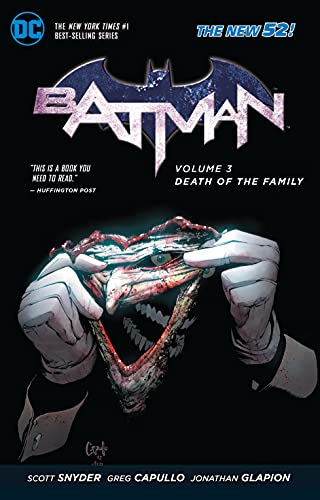
A dark, brutal, and psychologically intense one-shot that provides a possible origin for the Joker. Moore explores the idea that all it takes is "one bad day" to drive an ordinary man insane, drawing a disturbing parallel between Batman and his greatest nemesis. Brian Bolland's art is stunning, and the story has had a lasting and controversial impact on the Batman canon.
Independent Epics and ABC Comics (1990s-2000s)
Frustrated with the practices of mainstream publishers like DC, Moore largely moved to independent comics in the 90s. This period saw him create some of his most ambitious and personal works, culminating in his own comic book line, America's Best Comics (ABC). This move away from the big two allowed him to better control his own creations, giving him a deeper understanding of things like understanding book royalties in self-publishing.
From Hell (1991)

An incredibly dense and meticulously researched graphic novel that uses the Jack the Ripper murders to explore the dark soul of Victorian London. Illustrated with scratchy, unsettling art by Eddie Campbell, From Hell is less a "whodunit" and more a "why-dunit." Moore weaves a massive conspiracy involving the royal family, the Freemasons, and the very architecture of the city itself. It is a challenging but brilliant read.
Voice of the Fire (1996)
Moore's first prose novel is a strange and ambitious book. It tells the history of his hometown, Northampton, England, through twelve loosely connected stories spanning 6,000 years. Each chapter is told from a different perspective, from a Neolithic shaman in the first chapter to Moore himself in the last. It is a fascinating experiment in language and storytelling that lays the groundwork for his later novel, Jerusalem.
America's Best Comics (ABC) Imprint (1999)
In 1999, Moore launched his own line of comics, allowing him to create a new universe of characters free from corporate constraints.
- The League of Extraordinary Gentlemen: A Victorian-era super-team featuring characters from classic literature like Captain Nemo, Allan Quatermain, Dr. Jekyll, and the Invisible Man. It is a brilliant tribute to and critique of 19th-century fiction.
- Promethea: A wildly imaginative series that starts as a Wonder Woman-style story but quickly evolves into a guided tour of magic, mysticism, and the Qabalah. It is one of Moore's most visually stunning and intellectually dense works.
- Tom Strong: A fun, optimistic throwback to pulp heroes like Doc Savage. Tom Strong is a "science hero" who, along with his family, has adventures across time and space. It is a joyful celebration of the comics Moore loved as a child.
- Top 10: A police procedural set in Neopolis, a city where everyone, from the cops to the criminals to the pizza delivery guy, has superpowers. It is a clever and funny look at what everyday life would be like in a superhero world.
Modern Masterpieces and Prose (2000s-Present)
In the 21st century, Moore has focused on creator-owned projects, horror comics, and massive prose novels, further cementing his legacy as a writer unbound by genre or form.
Lost Girls (2006)
Created with his wife and collaborator, Melinda Gebbie, this is an explicit erotic graphic novel that brings together Alice from Alice in Wonderland, Wendy from Peter Pan, and Dorothy from The Wizard of Oz. On the eve of World War I, the three women meet at a hotel and share stories of their sexual awakenings. It is a controversial but beautifully illustrated work intended to be a serious exploration of sexuality and pornography as an art form.
Moore's Lovecraftian Cycle (2003-2017)
Moore has written a trilogy of horror comics that form a deep, disturbing critique of the works of H.P. Lovecraft. They are best read in a specific order for maximum effect (see the next section).
- The Courtyard (2003)
- Neonomicon (2010)
- Providence (2015)
Jerusalem (2016)

Moore's second prose novel is a monumental achievement. At over 1,200 pages, it is a sprawling, challenging, and deeply personal epic centered on a single square mile of Northampton. Like Voice of the Fire, it jumps through time and perspectives, but on a much grander scale, exploring concepts of time, eternity, poverty, and the hidden magic of the mundane. The sheer scale of the book can feel like trying to learn how to write a book like Game of Thrones, with its vast cast of characters and intricate world-building.
The "Long London" Series (2024-)
Moore's latest project is a five-volume fantasy novel series. The first book, The Great When, was released in late 2024 and introduces a London that exists outside of conventional time. A sequel, I Hear a New World…, is scheduled for release in English in May 2026. This series is already gaining attention, with a multi-season TV adaptation of The Great When in the works, a project that has received Moore's rare blessing.
Essential Alan Moore Series: Specific Reading Orders
Some of Moore's works are interconnected and benefit greatly from being read in a specific sequence. Here is how to approach his most popular series.
The Watchmen Reading Order: Where to Start?
This is the easiest one. The Watchmen reading order is simply:
- Watchmen (1986)
That's it. The original 12-issue series (or the collected graphic novel) is a complete, self-contained masterpiece. DC Comics later published prequels (Before Watchmen) and a sequel (Doomsday Clock) by other creative teams, but these are not by Alan Moore and are not considered essential. To get the pure, intended experience, just read the original book.
Navigating The League of Extraordinary Gentlemen Timeline
The League's timeline is more complex, spanning multiple volumes and historical eras. For the main story, the chronological reading order is:
- Volume I (1999)
- Volume II (2002)
- The Black Dossier (2007) – This one is a bit of a standalone sourcebook but fits here.
- Volume III: Century (2009-2012) – A single story released in three parts: 1910, 1969, and 2009.
- Nemo Trilogy – A spin-off focusing on Captain Nemo's daughter.
- Nemo: Heart of Ice (2013)
- Nemo: The Roses of Berlin (2014)
- Nemo: River of Ghosts (2015)
- Volume IV: The Tempest (2018-2019) – The final arc of the main story.
Moore's Lovecraftian Horror: A Three-Part Descent
This trilogy deconstructs the cosmic horror of H.P. Lovecraft while also confronting the author's racism. The story builds across the three books, and they absolutely must be read in this order to understand the full narrative.
- The Courtyard (2003): A short two-issue series that introduces the central mystery and concepts.
- Neonomicon (2010): A four-issue direct sequel that dives much deeper into the graphic horror. This book won the first-ever Bram Stoker Award for a Graphic Novel.
- Providence (2015): A twelve-issue prequel that also serves as the ultimate conclusion to the entire saga. It masterfully re-contextualizes the previous two stories and Lovecraft's original works.
The Self-Publishing Launch Checklist (2026)
A week-by-week spreadsheet that walks you through every step of launching your book. Available as an Excel file and Google Sheet.

Alan Moore's Major Awards
To give a sense of his critical acclaim, Moore is one of the most decorated writers in the medium's history. He has won dozens of awards over his career, cementing his reputation as a master storyteller.
| Award Won | Notable Work(s) | Year(s) |
|---|---|---|
| Jack Kirby Award | Swamp Thing, Watchmen | 1985, 1986, 1987 |
| Hugo Award | Watchmen | 1988 |
| Eisner Award (Best Writer) | Watchmen, From Hell, Promethea | 9 times between 1988-2006 |
| Bram Stoker Award | Neonomicon | 2011 |
| Inkpot Award | Career Achievement | 1985 |
His nine Eisner Awards for Best Writer is a record, showcasing a level of consistent excellence across different projects and decades that is nearly unmatched, as documented by Comic-Con International. It is a process that can be as intricate as self-publishing manga, requiring an immense amount of planning and creative energy.
Frequently Asked Questions
What is the best Alan Moore book for a beginner?
For a beginner, Watchmen is often the recommended starting point because it is a self-contained story that showcases everything that makes Moore a genius: complex characters, intricate plotting, and deep thematic resonance. If that seems too dense, V for Vendetta is another excellent, more focused choice.
Should I read Alan Moore's Swamp Thing run?
Absolutely. His run on The Saga of the Swamp Thing is one of the most influential works in modern comics. It redefined the character and introduced a new level of literary and horror writing to mainstream comics. It is where he first truly demonstrated his incredible talent to a wide audience.
Why does Alan Moore dislike adaptations of his work?
Moore believes that his comics are created specifically for the comic book medium and that they lose their unique structure and nuance when translated to film. He has often stated that the adaptations miss the point of the original stories and has famously disavowed them, demanding his name be removed from the credits. The upcoming TV series for The Great When is a rare exception where he has expressed his approval.
What is the chronological order of The League of Extraordinary Gentlemen?
The main story follows this path: Volume I, Volume II, The Black Dossier, Volume III: Century, and finally Volume IV: The Tempest. The Nemo Trilogy is a great spin-off to read after Volume III.
Are Alan Moore's prose novels worth reading?
Yes, but they are a very different experience from his comics. Voice of the Fire and especially Jerusalem are dense, experimental, and challenging books that demand a lot of a reader. If you enjoy his complex themes and are a fan of experimental literature, you will find them incredibly rewarding. His new "Long London" series appears to be a more accessible entry into his prose work.
Where does From Hell fit into his bibliography?
From Hell is a major work from his independent period in the 1990s. It represents a move toward more meticulously researched, creator-owned epics. It is best read after you are familiar with his 80s DC work, as it is one of his most complex and demanding graphic novels.